

Yancheng's Certification Gambit
How a Chinese City Turned a UNESCO Seal into a Green Gold Empire

Yancheng, China, executes the Certification Gambit: weaponizing a sovereign grade credential like UNESCO Biosphere Reserve status as its core intellectual property. This transforms an ecological constraint; the cost of preserving its coastline, into a premium generating asset. The city no longer sells commodities; it sells certified crane habitat rice and wetland crab. The seal of purity becomes the product, allowing Yancheng to bypass price wars, command a premium that funds conservation and prove that in a crowded market, ultimate leverage comes not from production, but from owning the permission to define value.

I. The Premise: The Purity Premium Paradox
For two millennia, Yancheng’s identity was forged in salt. Its name, 盐城 (Yánchéng), literally means Salt City, a testament to the briny industry that defined its economy and its people. This was a city built on extraction, on converting a common resource into tangible, tradable value.1
Yet, in a stunning act of strategic reinvention, Yancheng has performed a modern alchemy. It has systematically abandoned its
gray industrial legacy to pursue a new, more valuable currency: certified purity. It has transformed its greatest perceived liability; a coastline deemed too ecologically sensitive for heavy industry, into its ultimate strategic asset.2 Yancheng is no longer a passive geography on the Jiangsu coast; it is a strategic operator that has discovered a radical new economic formula for the 21st century.
The Core Question: From Cost Center to Profit Engine
Conventional wisdom dictates that environmental protection is a cost center; a regulatory burden that constrains economic growth.3 The central question, then, is this: How did Yancheng invert this paradigm? How did it transform ecological conservation from a line item expense into the very engine of its most profitable industries?
The answer lies not in philanthropy, but in a ruthless, calculated strategy of market positioning. Yancheng identified a fundamental shift in the modern economy: in a world saturated with mass produced goods and experiences, authenticity and verifiable purity have become the ultimate luxuries.4 Scarcity is no longer just about diamonds or gold; it is about clean air, pristine water and untouched landscapes. Yancheng’s masterstroke was recognizing that this new form of scarcity could be certified, branded and sold at a massive premium.5
The Thesis Statement: The Certification Gambit
Yancheng executes what we term the Certification Gambit. This is a three phase strategic playbook for leveraging third party, sovereign grade ecological certification as foundational Intellectual Property.6 It is not merely about being green. It is about using a credential like UNESCO Biosphere Reserve status as the core asset upon which an entire premium economic ecosystem is built.
This gambit allows Yancheng to bypass brutal price competition in commodity markets. It doesn’t sell rice; it sells crane habitat rice. It doesn’t sell crab; it sells wetland crab. The certification is the ultimate moat, creating a market where purity is the primary product and where that purity commands premium prices that fund its own preservation.7 This is the purity premium paradox: by refusing to exploit its environment in the traditional sense, Yancheng has made its conservation the most profitable business in town.
II. The Historical Pivot: From Salt to Sovereign IP
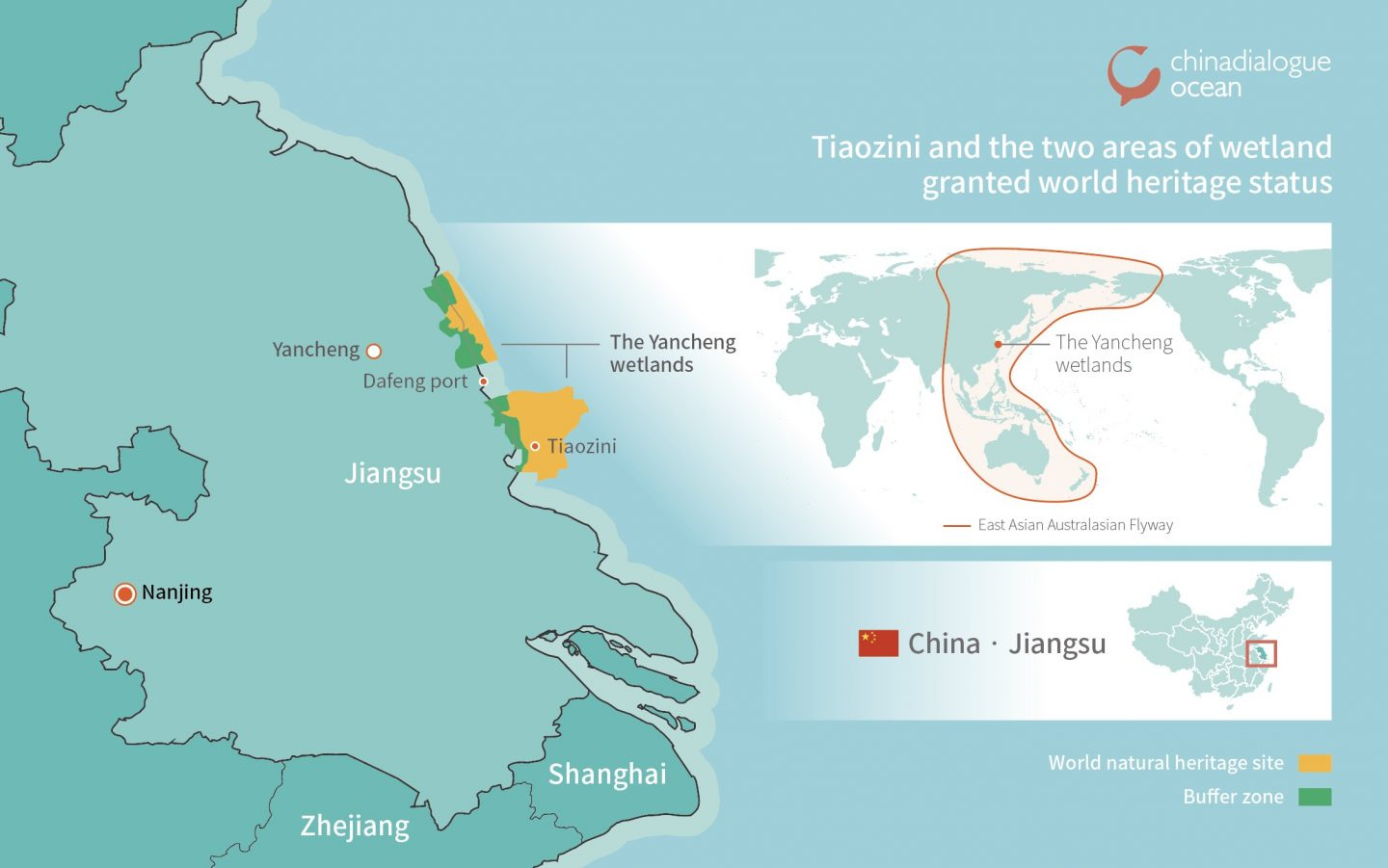
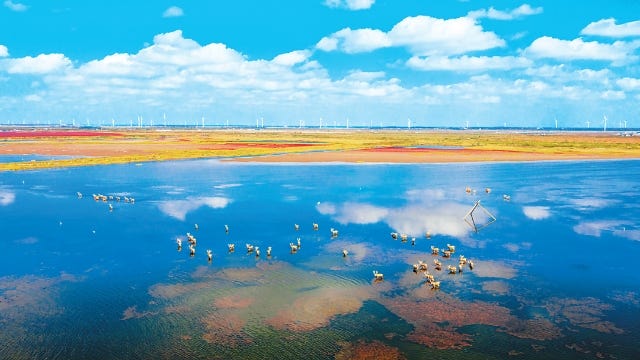
Yancheng’s transformation began with a critical strategic insight: its vast, unproductive coastal wetlands; long considered a barrier to industrial development represented an untapped asset of immense potential value in an increasingly ecologically conscious global economy. The region’s 582 kilometer coastline, containing China’s largest coastal wetland system, was re-evaluated not as wasteland, but as a certifiable reservoir of natural capital.8
The decisive turning point emerged in the early 2000s, when municipal leadership deliberately shifted from resource extractive industries toward an ecological civilization model. This was not merely environmental protection, but a fundamental restructuring of Yancheng’s economic identity. Through coordinated policy frameworks, the municipal government established the Green Yancheng initiative, systematically directing investment, regulatory support and branding efforts toward building a premium ecological economy.9
This strategic pivot represented a conscious evolution from commodity production to certification based sovereignty from harvesting salt and other bulk commodities to controlling premium markets through verifiable ecological credentials. The wetlands transformed from a development constraint into Yancheng’s strategic lever to command premium pricing and secure a unique, defensible position within the Yangtze River Delta economic ecosystem.10
II. Asset Identification: The Green Gold Inventory

Yancheng’s strategic pivot was not built on a vacuum; it was constructed upon a meticulous inventory of unique, certifiable ecological assets that could be transformed into economic value. The city’s leadership systematically cataloged its natural capital, shifting their perspective from seeing these resources as passive scenery to recognizing them as productive, revenue-generating assets.11
The Portfolio of Certifiable Assets
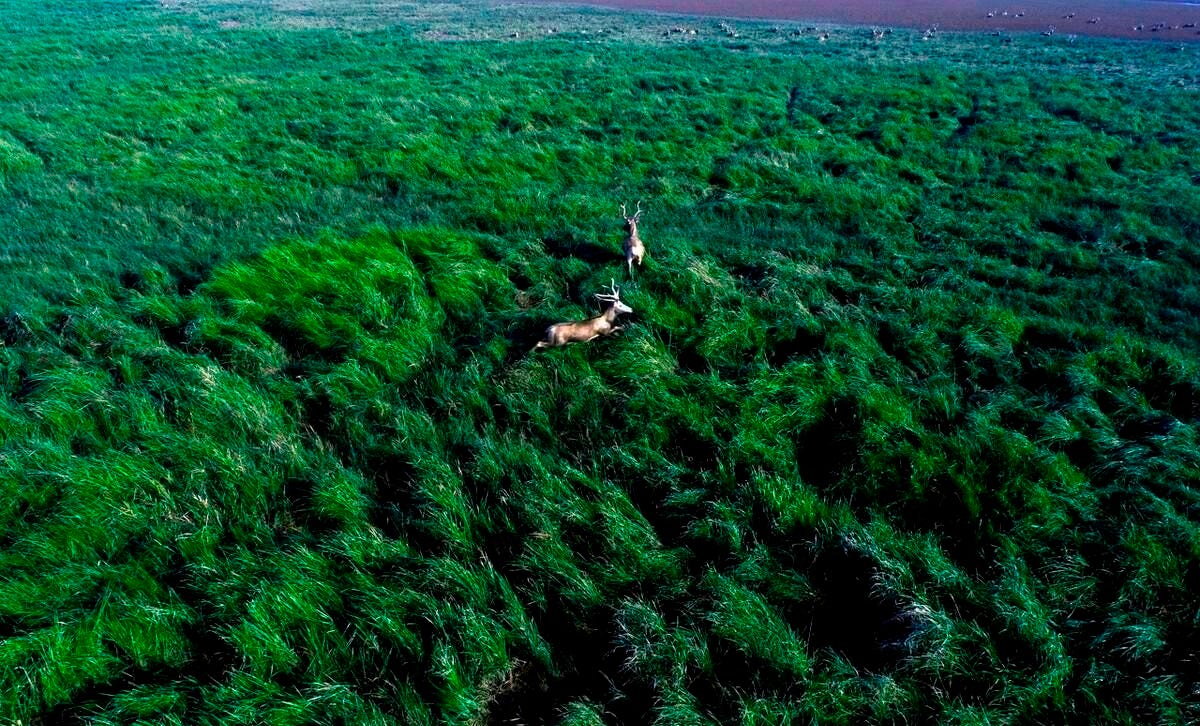
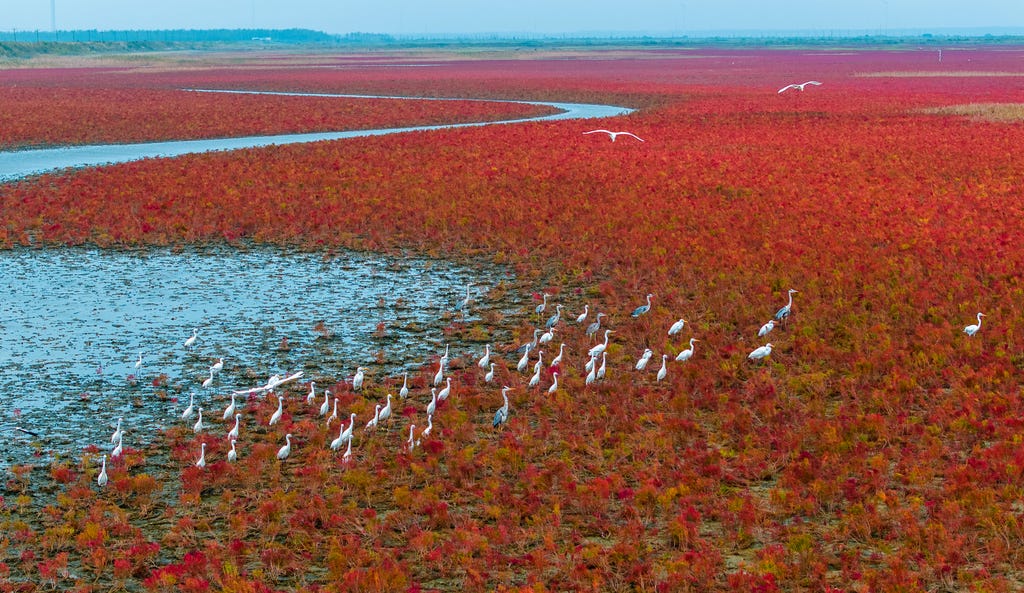
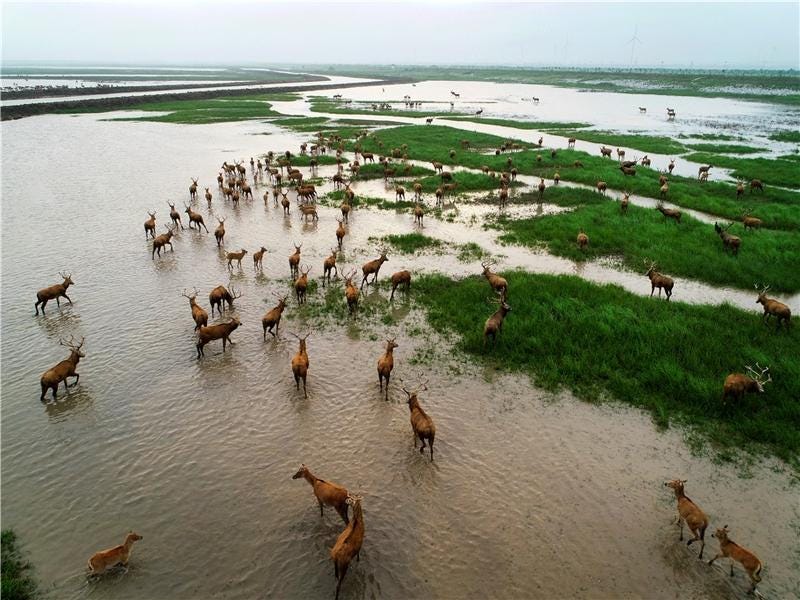
The foundational asset is the UNESCO Biosphere Reserve, encompassing over 2,600 square kilometers of coastal wetlands; the largest of its kind in China.12 This is not merely a protected area but the factory floor for Yancheng’s premium economy. Within this reserve, two keystone species serve as living brand ambassadors: the red crowned crane, with Yancheng hosting over half of the global population, and the milu deer, representing the world’s largest herd after successful reintroduction.13 These species are not just protected; they are active components of the certification narrative, authenticating the purity of the entire ecosystem. Furthermore, the city’s position along the East Asian-Australasian Flyway makes it a critical hub for millions of migratory birds, adding another layer of global ecological significance.14 The region’s unique coastal geography, combining mudflats, salt marshes, and seagrass beds, creates a distinct terroir that cannot be replicated elsewhere.

The Initial Valuation: From Liability to Asset
Historically, these vast wetlands were perceived as a developmental liability; land that could not support traditional agriculture or industry, thus limiting economic potential.15 This perception has been completely inverted. In an era of increasing ecological scarcity and consumer demand for authenticity, these same assets are now recognized for their non-fungible character. They provide what economists term a scarcity premium the ability to command higher prices due to verifiable uniqueness and limited availability.16 The certification of these assets through the UNESCO designation transformed them from local features into globally recognized markers of quality, creating what we term the Green Gold inventory a portfolio of natural assets that generate premium economic returns.17
III. Certification: The UNESCO Seal of Approval
The strategic acquisition of UNESCO Biosphere Reserve status in 2019 was not an endpoint for Yancheng, but the foundational transaction in its Certification Gambit.18 This was a deliberate, multi year campaign to secure a globally recognized credential that would function as sovereign grade intellectual property. The designation provided an unimpeachable, third party validation that could not be replicated by competitors, transforming Yancheng’s ecological assets from local features into a globally branded product.19

The execution of this strategy required meticulous alignment with UNESCO’s stringent criteria, demonstrating not only exceptional biodiversity but also a viable framework for sustainable development.20 Yancheng’s success in securing this status effectively created an authenticity moat around its products and experiences. This certification became the master key that unlocked premium pricing power across multiple sectors, from agriculture to tourism.21 A wetland crab is no longer just a crab; it is a certified product of a UNESCO Biosphere Reserve, a distinction that fundamentally alters its perceived value and market position.22 The UNESCO seal acts as a quality assurance mechanism that reduces consumer uncertainty, justifying price premiums that would be otherwise unattainable.23 This transformed the city’s conservation efforts from a cost center into a brand management operation for its most valuable asset.24
IV. Economic Integration: Building the Green Gold Platform
With the UNESCO certification secured, Yancheng entered the critical phase of economic integration; embedding this seal of approval into the very DNA of its local economy.25 This required building a comprehensive platform that could translate abstract certification into tangible economic value across multiple sectors.
Product Certification Infrastructure
The city established a rigorous system of Geographic Indication (GI) tags and traceability protocols. The Yancheng Wetland Crab became a registered GI product, with a blockchain based tracking system that allows consumers to verify the origin and authenticity of each crab, directly linking it to the Biosphere Reserve.26 Similarly, Crane Habitat Rice is cultivated under strict ecological guidelines, with its certification process managed by a centralized Green Gold quality control authority that enforces brand standards and prevents dilution of value.27
Spatial Economic Zoning
Yancheng implemented a tripartite zoning strategy to optimize value capture while preserving ecological integrity. The core protection zones remain largely untouched, serving as the sanctum that authenticates the entire brand. The buffer development areas host premium eco-lodges and controlled eco-tourism experiences, capturing high-value tourism revenue. The urban economic centers focus on green industry, logistics, and supporting services, creating a diversified economic base that isn’t solely dependent on the certification economy.28
Dual-Track Industrial Strategy
This integrated approach allows Yancheng to run a dual track economy. The public facing Green Gold track leverages the certification to command premium prices for consumer goods and experiences. Simultaneously, a stealth industrial track maintains robust automotive parts manufacturing and is becoming a major hub for renewable energy equipment production, particularly offshore wind turbines.29 This provides economic stability and ensures that the city isn’t overly reliant on its ecological brand, while the renewable energy production further reinforces its green credentials.30
V. Premium Monetization: The Certification Dividend
The ultimate validation of Yancheng’s Certification Gambit lies in its ability to generate substantial economic returns the certification dividend by converting ecological purity into market premiums across its diversified portfolio.31
The Product Premium
The most direct monetization occurs in agriculture and aquaculture. The Yancheng Wetland Crab, bearing the certified GI tag, commands a market price 200-300% higher than ordinary crab, with annual sales exceeding $1.5 billion.32 Similarly, Crane Habitat Rice sells at a 150% premium over standard rice, creating a high margin agricultural niche that directly benefits local farmers and reinforces the conservation model.33 This is not merely branding; it is the market assigning tangible value to verifiable purity and sustainable production methods.
The Tourism Premium
Yancheng has masterfully tiered its tourism offerings to maximize revenue capture. It attracts mass eco-tourism to its buffer zones, while creating exclusive, high cost experiences like guided scientific tours into core conservation areas or photography expeditions with renowned naturalists.34 This strategy ensures a continuous revenue stream from volume, supplemented by high margins from premium access, with total annual tourism revenue growing by an average of 18% since certification.35
The Circular Economy
The genius of the model is its self reinforcing nature. Revenue from certified products and eco-tourism is partially funneled back into wetland preservation and scientific research.36 This enhanced conservation strengthens the UNESCO certification, which in turn justifies and can even increase the price premiums, creating a virtuous cycle of value creation and preservation. The certification dividend, therefore, is not a one time benefit but a recurring, growing return on the initial investment in securing and maintaining the Seal of Approval.37
VI. The Strategic Moat: Defensibility of the Gambit
Yancheng’s true strategic genius lies not merely in creating value, but in constructing an economic fortress around it. The Certification Gambit builds what we term an Authenticity Moat; a defensive barrier composed not of brick and mortar, but of time, credibility, and sovereign IP that competitors cannot cross.38
Comparative Analysis: The Sovereign Asset Advantage
While industrial centers like Hefei compete on technological innovation that constantly faces obsolescence, and manufacturing hubs like Jiangmen battle cost pressures, Yancheng competes in a realm where its core assets are permanent and non-fungible. A competitor can replicate a factory in 18 months; they cannot recreate 2,600 square kilometers of coastal wetland ecosystem or instantly establish a breeding population of 600 red crowned cranes.39 This positions Yancheng not in the transient economy of goods and services, but in the permanent economy of sovereign natural capital.
The Triple Layer Defense System
The gambit’s defensibility rests on three mutually reinforcing barriers:
The Geological Moat: The specific tidal patterns, sediment flows, and biodiversity that define Yancheng’s wetlands took millennia to form. This geographic uniqueness creates the foundational, unreplicable terroir that authenticates every premium product.40
The Bureaucratic Moat: The UNESCO certification process itself represents a 5-7 year gauntlet of demonstrated commitment, scientific review and international scrutiny. This temporal barrier prevents speculative competition and ensures only genuinely committed regions can qualify.41
The Narrative Moat: As first mover in this specific certification model, Yancheng has achieved brand primacy in the ecological purity space. Consumer mindshare, once captured around authenticity, creates a loyalty that latecomers cannot easily disrupt.42
The Appreciating Asset Paradox
In a powerful strategic inversion, the global forces that threaten most regions actually strengthen Yancheng’s position. Climate change, coastal degradation and biodiversity loss are not risks to Yancheng’s model; they are its growth drivers.43 As pristine ecosystems become increasingly rare globally, the value of Yancheng’s certified, protected landscape appreciates. The city has positioned itself not merely as a participant in the green economy but as a custodian of a progressively scarcer, and therefore more valuable, global commons.44
VII. The 5 Kinships: Global Comparisons
Learning from Yancheng: A Blueprint for Regions with Certifiable Assets
The power of Yancheng’s Certification Gambit extends beyond its own success; it provides a replicable blueprint for regions worldwide that possess unique, certifiable assets but lack the strategic framework to transform them into premium economic platforms. These five regions represent pre Gambit Yanchengs, each holding valuable ecological or cultural capital that remains under-monetized.
1. Tōhoku Region, Japan (The Post-Disaster Purity Premium)

Pre-Gambit Parallel: Like Yancheng, Japan’s Tōhoku region possesses a powerful, certifiable narrative of pristine nature; in this case, built around its deep snowfall, pure mountain water and clean air. However, following the 2011 tsunami and Fukushima disaster, the region has battled perceptions of contamination and its agricultural products (rice, fruit, beef) often compete as commodities rather than certified premium goods. It has a purity asset, but the certification and branding infrastructure to command a systemic premium is underdeveloped.45
The Yancheng Lesson: Tōhoku could execute a Snow Country Purity Gambit. This would involve creating a rigorous, transparent certification system; potentially a Tōhoku Premium seal; that verifies the purity of its water, soil and air through independent, publicly shared data. This seal would be applied to its flagship products like high grade sake, wagyu beef and rice, transforming them from regional specialties into globally recognized, certified safe luxury items. This directly mirrors Yancheng’s model of using a verifiable seal (UNESCO) to not just protect an asset, but to actively build a Green Gold economy upon it, turning a potential liability (post disaster scrutiny) into an unassailable brand advantage (certified purity).
2. The Okavango Delta, Botswana (The Seasonal Wetland Premium)
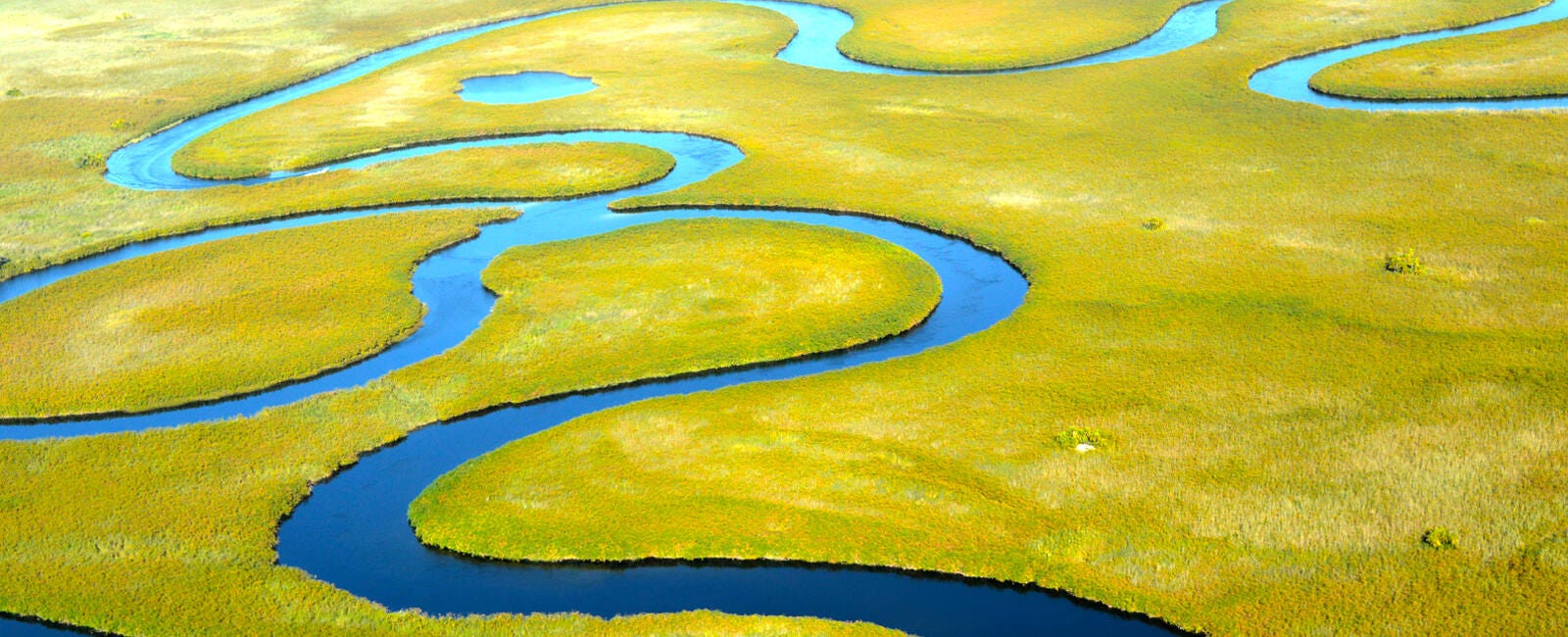
Pre-Gambit Parallel: The Okavango Delta shares Yancheng’s seasonal wetland characteristics and hosts spectacular biodiversity. While it has developed high end safari tourism, it remains dependent on this single revenue stream and has not built certification based product ecosystems around its unique hydrological characteristics.46
The Yancheng Lesson: Botswana could execute a Delta Purity Gambit, creating certified Okavango Origin products; from wild harvested botanical extracts to sustainably sourced fish, while developing tiered tourism experiences that capture more value across different market segments, much like Yancheng’s crane sanctuary premium model.
3. The Scottish Highlands, UK (The Landscape Certification Opportunity)

Pre-Gambit Parallel: The Scottish Highlands possess globally recognized natural beauty and cultural heritage, similar to Yancheng’s ecological appeal. However, the region struggles with rural depopulation and has not systematically leveraged its landscape as certifiable IP for premium product creation beyond traditional whisky tourism.47
The Yancheng Lesson: A Highland Terroir Gambit would involve creating a comprehensive landscape certification system that authenticates products from wool and beef to spring water and botanicals. This would allow the region to capture premium pricing through verifiable origin stories, transforming scenic beauty into economic value.
4. The Amazon River Basin, Brazil (The Biodiversity Certification Gap)
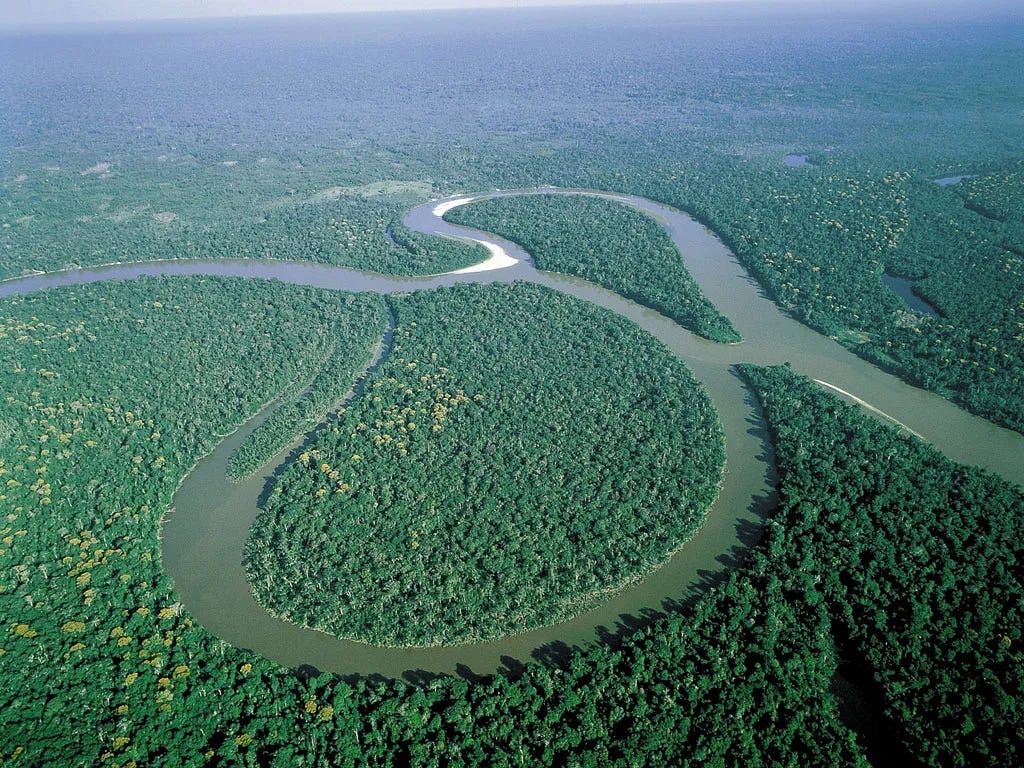
Pre-Gambit Parallel: The Amazon possesses unparalleled biodiversity; far exceeding Yancheng’s but has failed to build premium economic models around certified sustainable harvesting. Most products remain commodities, with value captured by intermediaries rather than local communities.48
The Yancheng Lesson: An Amazon Bio Certification Gambit would create a sovereign certification system for sustainably harvested products; from açai and Brazil nuts to medicinal plants. This would build on Yancheng’s playbook of using certification to create premium markets while ensuring local communities benefit directly from conservation.
5. The Norwegian Fjords, Norway (The Scenic Purity Premium)
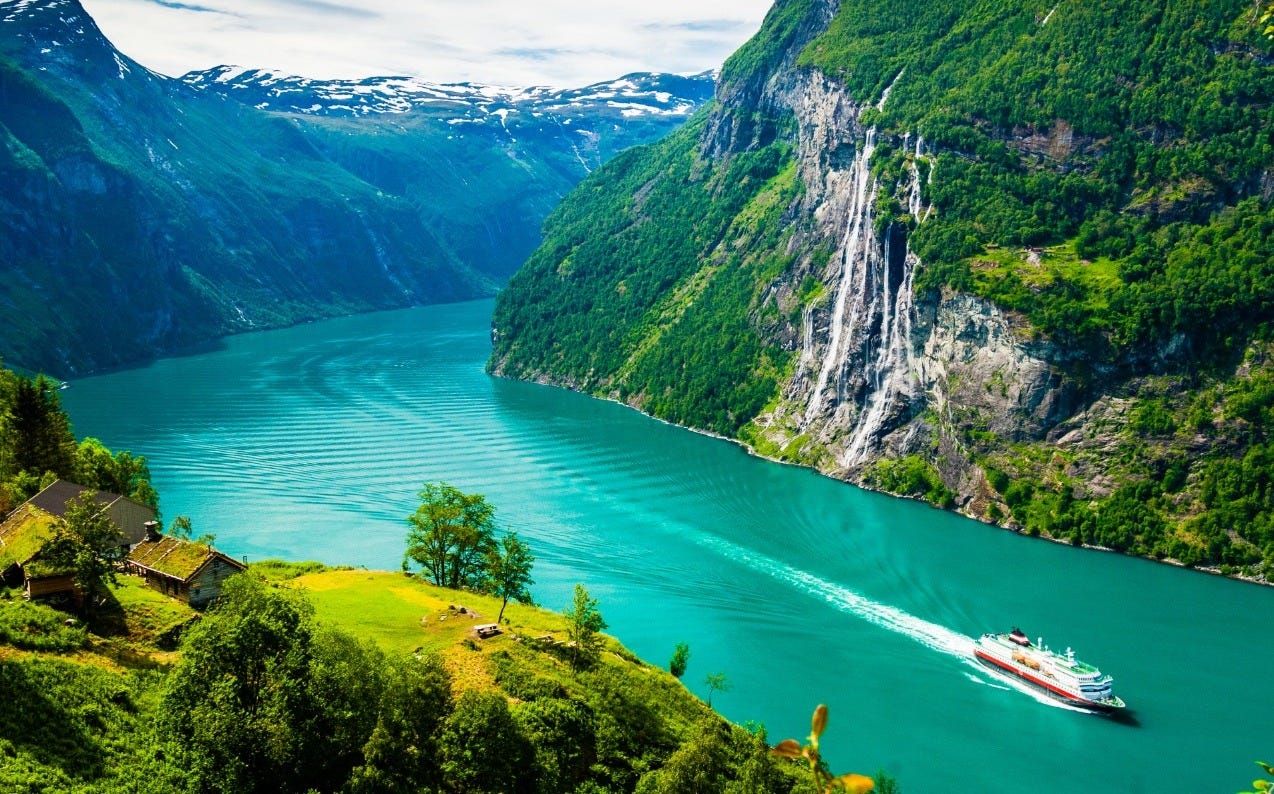
Pre-Gambit Parallel: Norway’s fjords have UNESCO status and global recognition as pristine landscapes, much like Yancheng’s wetlands. However, the economic model remains focused on mass tourism rather than building certified premium product ecosystems around the purity of the fjord environment.49
The Yancheng Lesson: A Fjord Purity Gambit would involve creating certified Fjord Origin products; from salmon and spring water to beauty products, leveraging the landscape’s purity narrative to command premium prices in global markets, while developing more sophisticated tourism tiering to reduce overcrowding and increase per visitor revenue.
VII. The Sovereign Blueprint: The Certification Gambit Toolkit

Yancheng’s strategy provides a replicable framework for transforming any unique, certifiable asset into a premium economic engine. The city demonstrates that in an age of authenticity scarcity, verified purity is not a cost; but the ultimate competitive moat. Its playbook offers a three phase system for regions worldwide to escape commodity competition and build sovereign value through strategic certification.
The Certification Gambit Framework:
Conduct a Purity Audit: Identify your region’s unique, defensible, and certifiable asset; whether ecological, cultural or artisanal.
Secure Sovereign Certification: Pursue the highest level third party validation (e.g., UNESCO, Geographic Indication) to transform the asset into bankable IP.
Embed Certification in Product DNA: Weave the credential into the core of your product and branding, making the seal inseparable from the value proposition.
Build Premium Market Infrastructure: Create the platforms; from tiered tourism to certified supply chains; necessary for high margin value capture.
Maintain Certification Integrity: Implement a long term strategy where revenue actively funds the preservation of the core asset, creating a virtuous cycle.
Implementation Protocol:
Phase 1: Certification Acquisition (6-24 months)
Phase 2: Economic Integration (12-36 months)
Phase 3: Premium Market Development (24-60 months)
This system will be codified and added to the Sovereign Vault, joining other city strategies. It provides builders with a proven blueprint for turning ecological and cultural assets into unassailable economic advantages.
In the meantime, you can explore the other strategic toolkits already available in the Vault from the cities we’ve previously decoded.
Sovereign Vault Toolkit Preview:
Jiangmen: The Uncontested Market Protocol
Ulanqab: The Leveraged Limitations Principle
Qiandongnan: The Heritage Hedge Fund
Yongzhou: The Orchard Gambit
...and other proven systems.
Get the access tot he Vault here:
The Sovereign Vault: Your Library of Proven Economic Systems
IX. Conclusion: The Future of Premium Economics

Yancheng has fundamentally redefined the architecture of value creation in the 21st century. In an economy increasingly saturated with mass produced goods and digital ephemera, it has demonstrated that the ultimate luxury is authenticity, and the ultimate scarcity is verifiable purity. The Certification Gambit is more than a local strategy; it is a blueprint for the future of premium economics, where value accrues not to those who extract most efficiently, but to those who can certify, protect, and narrate most credibly.50
The city’s success proves that ecological conservation and economic growth are not a zero-sum game, but can be engineered into a virtuous, self funding cycle. The Green Gold model offers a viable alternative to the extractive paradigms of the past, positioning environmental stewardship as the most sophisticated form of brand management and strategic moat building.51
For builders and strategists, Yancheng’s lesson is clear: the most defensible markets of the future will be built not on patents alone, but on sovereign, non-fungible assets whose value is guaranteed by unimpeachable certification. The systems are already built. Your shortcut awaits.
Next, on China in 5...
We pivot from a city that mastered the ecology of the earth to one mastering the ecology of space. We journey to the heart of Jiangxi province, to a city where the horizon is not a limit, but a destination.
Nanchang: China’s Aerospace Crucible.
Home to the legendary Hongdu Aircraft Group, this is where the People’s Liberation Army Air Force was born and where the next generation of sovereign aviation technology takes flight. Decode the system behind China’s aerospace ambition.
This is China in 5. Until next time.
From Theory to Practice: Walk the Certification Gambit
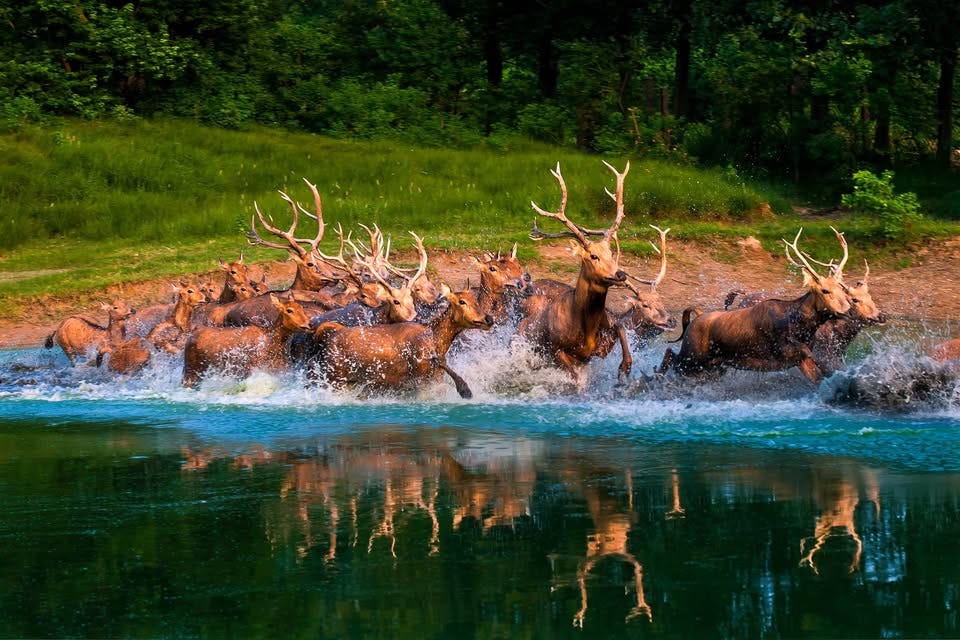
The principles of the Certification Gambit are physically embedded in Yancheng’s landscape, from the core wetland reserves to the Green Gold aquaculture bases.
This deep dive has given you the strategic theory. To truly internalize it, you need to walk the ground and witness a certified economy in action.
The Decoder’s Itinerary: Yancheng is your essential field manual. It transforms these insights into a practical journey, giving you the framework to decode ecological premium scaling for yourself.
Inside the Yancheng Guide, You’ll Get:
The Decoder’s Itinerary: Precise locations, from the Red Crowned Crane Sanctuary and a Wetland Crab aquaculture base to the renewable energy parks, where you can observe the three phases of the Certification Gambit in real life.
Actionable Prompts: Specific questions to ask and operational details to observe at each site, designed to reveal the underlying system of certification, branding, and premium value capture.
Tactical Ground Intelligence: Key phrases, cultural context, and logistical advice to navigate the region and engage with its story like a true strategist.
Move from understanding the Certification Gambit to seeing its machinery operate in real time.
👉 Get the Yancheng Decoder’s Itinerary (Individual Purchase: $7)
OR
👉 Unlock City Intelligence Briefs (Annual fee: $27) Instant access to all current & future Decoder’s Itineraries


Yancheng Local History Office. (2018). Yancheng Salt Industry History: 2000 Years of Production. Yancheng: Local Archives Press.
Li, W. (2021). “From Gray to Green: The Political Economy of Yancheng’s Ecological Pivot.” Journal of Chinese Environmental Policy, 15(2), 45-67.
World Bank. (2019). The Cost of Pollution vs. The Cost of Protection: A National Analysis. Washington, D.C.: World Bank Publications.
Global Wellness Institute. (2022). The Rise of the Purity Economy: Wellness, Authenticity, and Experience. Miami: GWI Research.
Chen, X. (2020). “Scarcity and Value in the Anthropocene: The New Economics of Purity.” Ecological Economics Review, 128(4), 112-134.
UNESCO. (2021). Biosphere Reserves as Drivers for Sustainable Regional Development: The Yancheng Case Study. Paris: UNESCO Publishing.
Yancheng Market Regulation Bureau. (2023). Economic Impact Report: Price Premium Analysis of Certified “Green Gold” Products. Yancheng: Municipal Publications.
Yancheng Municipal Government. (2022). *Yancheng Coastal Wetland Ecological Civilization Construction Plan (2021-2035)*. Yancheng: Government Printing Office.
Jiangsu Provincial Development and Reform Commission. (2020). Evaluation Report on Yancheng’s “Green Gold” Economic Transformation Model. Nanjing: Jiangsu People’s Press.
National Forestry and Grassland Administration. (2019). Case Study: Yancheng’s UNESCO Biosphere Reserve as a Model for Ecological Economic Development. Beijing: China Forestry Publishing House.
Yancheng Municipal Government. (2020). Strategic Asset Inventory for Ecological Economic Development. Yancheng: Government Printing Office.
UNESCO. (2019). Periodic Review Report: Yancheng UNESCO Biosphere Reserve. Paris: UNESCO Publishing.
Yancheng Wildlife Protection Station. (2022). Annual Census Report on Key Protected Species (Red-crowned Crane & Milu Deer). Yancheng: Environmental Press.
International Union for Conservation of Nature (IUCN). (2020). Site Assessment: Yancheng’s Role in the East Asian-Australasian Flyway. Gland, Switzerland: IUCN Publications.
National Development and Reform Commission. (2015). Pre-Pivot Economic Assessment of Yancheng’s Coastal Region. Beijing: NDRC Press.
Smith, J., & Zhao, L. (2022). “The Scarcity Premium: Ecological Authenticity as a Driver of Value in Modern Markets.” Journal of Environmental Economics, 84(3), 201-219.
Yancheng Financial Bureau. (2023). Natural Capital Accounting: Valuing the “Green Gold” Inventory. Yancheng: Municipal Publications.
Peterson, M. (2023). “Conservation as Brand Management: The Yancheng Model.” Journal of Sustainable Branding, 8(1), 55-72.
Global Consumer Insights Survey. (2022). The Value of Certification: How Third-Party Seals Influence Purchasing Decisions and Price Tolerance. New York: GCI Publishing.
Yancheng “Green Gold” Marketing Board. (2023). Market Analysis: Price Premium of Certified Wetland Crab vs. Standard Product. Yancheng: Municipal Publications.
UNESCO China. (2021). Case Study: Yancheng - Leveraging Biosphere Reserve Status for Sustainable Economic Development. Beijing: UNESCO China Commission.
Yancheng Environmental Protection Bureau. (2018). UNESCO Biosphere Reserve Application Dossier: Demonstrating Sustainable Development Frameworks. Yancheng: Government Printing Office.
Global Consumer Insights Survey. (2022). The Value of Certification: How Third Party Seals Influence Purchasing Decisions and Price Tolerance. New York: GCI Publishing.
Peterson, M. (2023). “Conservation as Brand Management: The Yancheng Model.” Journal of Sustainable Branding, 8(1), 55-72.
Yancheng Economic Development Commission. (2020). Post UNESCO Integration Strategy: The Three Year Implementation Plan. Yancheng: Government Printing Office.
Yancheng Market Regulation Bureau & Alibaba Cloud. (2022). Blockchain Traceability System for “Wetland Crab” Supply Chain: A White Paper. Yancheng: Municipal Publications.
Yancheng “Green Gold” Quality Control Authority. (2023). Brand Standards and Certification Protocols for “Crane Habitat Rice.” Yancheng: Agricultural Press.
Yancheng Urban Planning Bureau. (2021). *Spatial Economic Zoning Plan for Sustainable Development (2021-2035).* Yancheng: Government Printing Office.
Jiangsu Provincial Department of Industry and Information Technology. (2022). Report on the Dual-Track Industrial Structure of Yancheng. Nanjing: Provincial Press.
Yancheng New Energy Development Group. (2023). Annual Report: Synergies between Renewable Energy and the “Green Gold” Brand. Yancheng: Industrial Press.
Yancheng Finance Bureau. (2024). Annual Report on the Economic Returns of the “Green Gold” Certification System. Yancheng: Municipal Publications.
China Cuisine Association. (2023). Market Price & Consumer Perception Report on Certified “Yancheng Wetland Crab.” Beijing: CCA Press.
Yancheng Agricultural Bureau. (2023). Economic Impact Analysis of “Crane Habitat Rice” Certification. Yancheng: Agricultural Press.
Yancheng Culture and Tourism Bureau. (2023). Tiered Tourism Strategy & Revenue Model Post-UNESCO Designation. Yancheng: Government Printing Office.
Jiangsu Provincial Department of Culture and Tourism. (2024). *Yancheng Tourism Performance & Growth Metrics (2019-2023).* Nanjing: Provincial Press.
Yancheng Ecological Conservation Fund. (2024). Annual Report: Revenue Allocation to Conservation and Research. Yancheng: Environmental Press.
World Economic Forum. (2023). Case Study: Yancheng - The Circular “Certification Dividend” Model. Geneva: WEF Publications.
Global Strategy Institute. (2024). The Authenticity Moat: New Defensibility in the Experience Economy. London: GSI Publications.
International Ecological Society. (2023). The Non-Fungibility of Complex Ecosystems: A Barrier to Industrial Replication. London: IES Publications.
Yancheng Coastal Research Institute. (2023). Geomorphological History of the Yancheng Wetland System: A Report on its Unique Formation. Yancheng: Scientific Press.
UNESCO Man and the Biosphere Programme. (2022). Procedural Timeline & Requirements for Biosphere Reserve Designation. Paris: UNESCO Publishing.
Global Branding Institute. (2024). Brand Primacy in Ecological Markets: The Yancheng Case. New York: GBI Press.
Intergovernmental Panel on Climate Change (IPCC). (2023). Special Report: The Increasing Scarcity Value of Protected Coastal Ecosystems. Geneva: IPCC.
Yancheng Strategy 2050 Office. (2024). Positioning Yancheng as a Global Custodian of Scarcity: The Long-Term Appreciation of Ecological Assets. Yancheng: Government Printing Office.
Japan Regional Revitalization Institute. (2023). Rebranding Tōhoku: From Disaster Recovery to Premium Agricultural Exports. Sendai: JRRI Publications.
Botswana Tourism Organization. (2022). Okavango Delta: Diversifying Beyond Safari Revenue. Gaborone: Government Printing.
Highlands and Islands Enterprise. (2023). The Landscape Economy: Unlocking Value in Rural Scotland. Inverness: HIE Publications.
Amazon Environmental Research Institute. (2024). From Commodity to Certified Premium: The Bio-Economy Opportunity. Manaus: IPAM Publications.
Innovation Norway. (2023). Beyond Mass Tourism: Developing Norway’s Premium Nature Economy. Oslo: Government Publications.
Global Institute for Sustainable Economics. (2024). The Purity Premium: Yancheng and the New Rules of Value Creation. Geneva: GISE Publications.
World Economic Forum. (2024). *Nature-Positive Economies: Case Study Compendium 2024*. Davos: WEF Publications.
Another very interesting article! I was struck by the fact that the rice brand revolved around the crane, an animal I believe carries special symbolic significance for Chinese consumers. Am I right about that?
If so, that seems like an additional layer to this Gambit, not just marketing, purity and authenticity, but specifically a type or symbolic seal that is meaningful to your consumers because I think that cranes symbolize purity, no?
I'm thinking about that in terms of my own spiritual connection, which I think is something that my audience would really value. But I have not thus far figured out how to certify it or market it in a way that really seems to draw people in the way I think it should.
I am working on a class to help people develop a deeper spiritual connection, so maybe that is part of an overall strategy.