


I’ve always been good at starting projects. Finishing them? That was harder...
...The scale is different, but the psychological mechanism is identical: Going public raises the stakes and concentrates the mind.
You did it.
You made the bold Public Bet. You launched your thing. You rode that first wave of excitement, fueled by the pressure of accountability.
But now, the applause has faded. The congrats! messages have dried up. You’re staring at the calendar, and the sheer, monstrous scale of your long-term project; weeks, months, years of work is staring back.
This isn't a failure of motivation. This is The Second Wall: The Momentum Dip.
But the explosive energy of a public launch doesn't last forever. The bet got me started, but a few weeks in, I hit it: The Momentum Dip. The external applause fades, and you're left alone with the sheer, daunting scale of the project. This is the wall where the initial excitement is replaced by the cold fear of the grind. The bet forces the first step, but it doesn't teach you how to sustain the pace for the hundreds of steps to come.
It’s the silent killer of grand projects. It’s not a dramatic failure; it’s a slow, quiet fizzle. A descent from passionate creator to overwhelmed operator, wondering how you’re supposed to sustain this pace for the hundreds of steps still to come.
The Public Bet forced the first step. But it’s utterly silent on the most important question: how do you build something that lasts, without burning yourself to ash in the process?
2. The Crucial Link
You just read my origin story. You know the collapse, the rabbit hole, and the long, messy evolution of the China in 5 idea.
But an idea, no matter how powerful, is fragile. A mission, no matter how compelling, is just a dream without a system to sustain it. When the initial adrenaline of the public bet faded, I hit The Second Wall. Hard.
Staring down a 707-week timeline wasn't exciting; it was terrifying. The weight of that commitment; over thirteen years was paralyzing. And it was made infinitely harder because I was doing it in total silence. I had launched my public bet to zero followers. No applause. No comments. Just the silent echo of my own commitment.
This is the real Momentum Dip. It’s not just a fade from excitement; it’s starting in a vacuum. The doubt isn’t just “Can I do this?” but “Is anyone even out there?”
The curiosity was there, but it was being smothered by the sheer, cold fear of the grind and the deafening silence. How do you possibly maintain quality and consistency on a scale like that when no one is listening?
This is where so many grand projects die. Not in a dramatic explosion, but in a slow, quiet surrender to overwhelm. I knew I had to build something stronger than my motivation. Something more reliable than my discipline. I needed a system not just to be consistent, but to survive the silence.
This system, the Momentum Builder wasn't a nice to have productivity hack. It was a necessary lifeline I forged to save the project, and my sanity. It's the operating system that keeps you going when zero people are listening. It's how you build the foundation before the house is full.
The public bet was the why; the compelling reason to start.
This system is the how; the architecture that makes it possible to finish.
It is the direct answer to the failure and burnout I experienced before. It's the operational embodiment of the lesson I learned: that true resilience isn't about gritting your teeth; it's about building a better engine.
The public bet provides the ignition. This system is the fuel injection. And it's the only reason this 707 week mission is not just alive, but thriving.
3. The Combined Metaphor
This is the core mechanic. The Public Bet is the dramatic launch from the rocket pad. It's all fire and noise and ambition.
But what happens to the rocket after it breaks the atmosphere, when the sky turns black and the Earth falls away? The initial boosters are gone. This is The Momentum Dip the silent, terrifying vacuum of space where most missions stall and drift, lost forever.
The Momentum Builder System isn't another booster. It's the guidance system and the life support. It's the intricate set of rules and routines that keeps the capsule on course, the oxygen flowing, and the pilot sane and focused on the distant goal, one star at a time."
Why it works: The rocket in the vacuum of space is an incredibly powerful metaphor for the isolation and terror of The Momentum Dip. It frames your system as nothing less than essential for survival, which is exactly what it was for you.
4. The Three Components of the Momentum Builder System
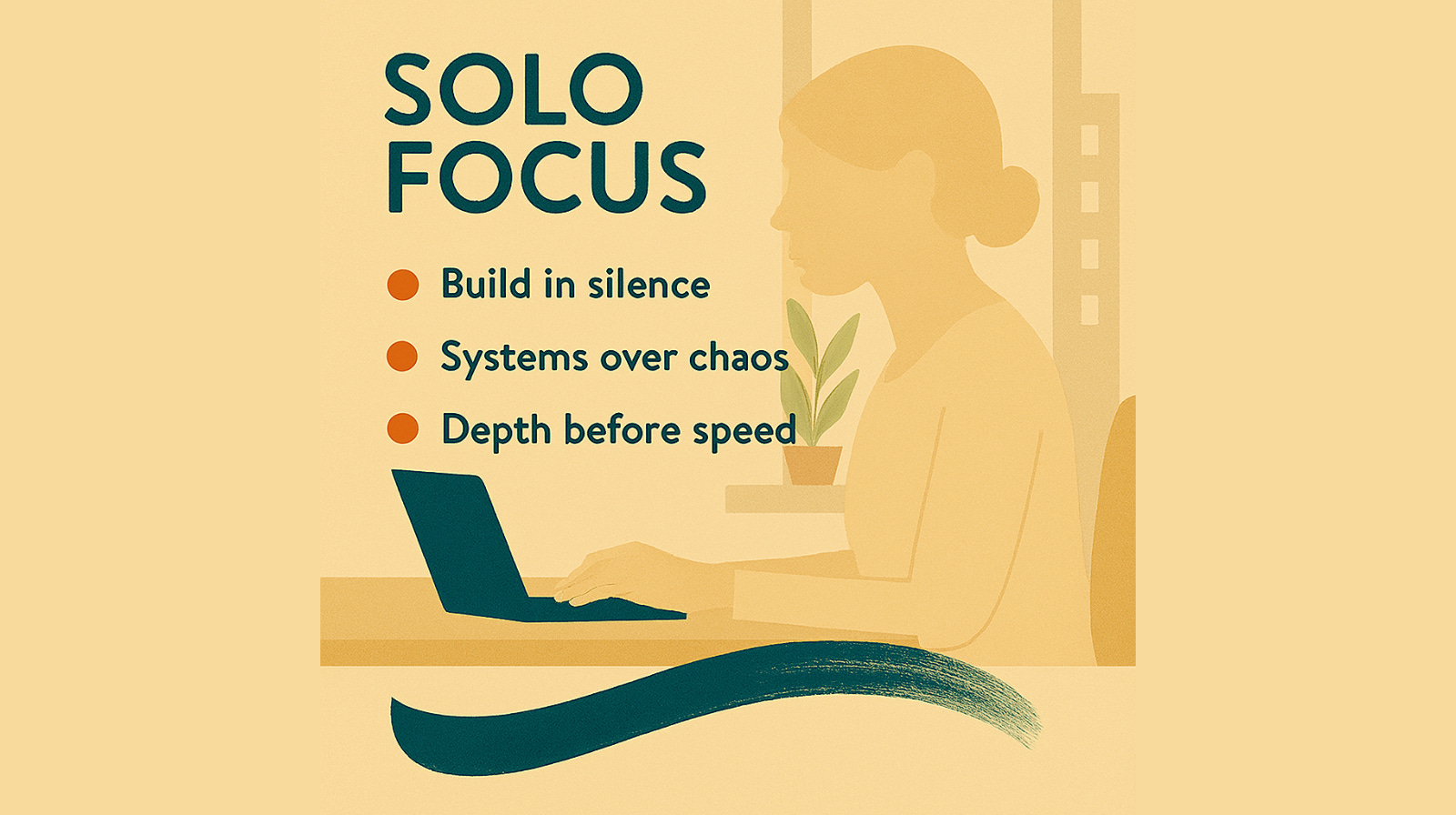
This system isn’t theoretical. It is a set of three precise antidotes to the three specific poisons that kill long-term projects. I didn’t invent them to be efficient; I assembled them to survive.
Component 1: The Weekly Sprint (The Rhythm)
The Pain Point: The overwhelming weight of a long term goal causing paralysis.
The Principle: You don't work on a '707-week project.' You work in a series of 7 day sprints.
Your Practice: My non negotiable cycle has three core outputs every week, creating a predictable rhythm of context, depth, and application:
Wednesday: 7 Things to Know About [City]. This is the essential introduction and overview. It forces a broad scan and provides the foundational context for the city. One of these seven points is a direct lead in to the weekly Deep Dive.
Friday: The Deep Dive. This is the primary intellectual product of the week a long form article detailing the core strategic lesson from the city (e.g., Hefei's VC model, Wanzhou's adaptation framework).
Monday: 5 Kinships for [City]. This is the crucial act of translation. It answers the so what? by connecting the Chinese city's strategy to five global counterparts facing similar challenges, building a practical, global framework library.
This rhythm context on Wednesday, depth on Friday, global application on Monday is the sustainable heartbeat of the entire project.
Why It Works: It collapses an impossible timeline into a manageable one.
This might sound like too much. But that's the entire point of the system. It isn't. This output isn't the result of burning the midnight oil; it's the result of a rigid process that eliminates friction and decision fatigue.
The 7 Things post is a structured template, filled in during initial research. The Deep Dive is the focused output of that research. The 5 Kinships is a disciplined exercise in pattern matching, using a pre built framework.
You aren't creating three things from scratch. You are executing one process with three automated outputs. This is what makes the pace sustainable and prevents overwhelm. You only ever have to focus on the next 7 days and these three concrete, well defined deliverables.
Component 2: The Thematic Focus (The Constraint)
The Pain Point: Scope creep and “perfectionism paralysis.” The urge to include every fact, cover every angle, and make the piece the “definitive guide.” This leads to unfinished work, missed deadlines, and exhaustion.
The Principle: You cannot say everything. Therefore, you must say one thing exceptionally well. A powerful constraint is not a limitation; it is a focusing tool that forces clarity and depth.
Your Practice: My guiding question for every single city: “What is the one repeatable, exportable lesson from this place?” (e.g., Hefei’s model for state led industrial bets, Wanzhou’s framework for adaptive resilience). Everything in the article must serve that single theme.
Why It Works: It defeats perfectionism by making the goal clear and achievable. It transforms the writing process from “explaining a city” to “illustrating a powerful concept,” which is infinitely more valuable to the reader.
Component 3: The Assembly Line (The Process)
The Pain Point: Decision fatigue and the energy drain of starting from a blank slate every single time. Wasting precious mental energy on how to do the work instead of actually doing the work.
The Principle: You are not an artist staring at a blank canvas. You are a craftsman on a production line. Your job is not to invent a new process each time, but to execute a proven one with high quality.
Your Practice: I use standardized templates and checklists for every stage: a research template to capture data uniformly, a drafting structure (like this article itself follows), and an editing checklist for quality control. I am not creating from scratch; I am filling in a proven framework.
Why It Works: It eliminates countless micro decisions, preserving your creative energy for the value add (the insights and connections). It ensures consistent quality and drastically reduces the friction of starting. It makes the act of creation efficient and repeatable.
Here is the Summary
Component 1: The Weekly Sprint (The Rhythm)
The Pain Point: "The overwhelming weight of a long-term goal causing paralysis."
The Principle: "You don't work on a '707-week project.' You work in a series of 7-day sprints."
Your Practice: "My non-negotiable cycle: Research (Day 1-3) → Draft (Day 4-5) → Edit/Polish (Day 6) → Publish (Day 7)."
Why It Works: "It collapses an impossible timeline into a manageable one. You only ever have to focus on the next 7 days. This eliminates overwhelm."
Component 2: The Thematic Focus (The Constraint)
The Pain Point: "Scope creep and 'perfectionism paralysis'—the urge to say everything about a topic."
The Principle: "You cannot cover everything. You must choose one single, powerful, exportable insight."
Your Practice: "My guiding question: 'What is the one repeatable lesson from this city?' (e.g., Hefei's VC model, Wanzhou's adaptation). Everything else is cut."
Why It Works: "This constraint is a liberating force. It forces clarity, creates sharper content, and defeats the demon of perfectionism."
Component 3: The Assembly Line (The Process)
The Pain Point: "Decision fatigue and the energy drain of starting from a blank slate every time."
The Principle: "You don't 'create' from scratch each time; you execute a standardized production process."
Your Practice: "I use templates and checklists for each stage: a research template, a drafting structure, an editing checklist. I am filling in a proven framework."
Why It Works: "It eliminates countless micro-decisions. All your creative energy is focused on the value-add, not the process. It makes high-quality output efficient and repeatable."
5. Finding the Rhythm (The Evolution of a Format)
This polished system, the weekly deep dive, the 7 things, the 5 kinships didn't arrive fully formed. It emerged through a process of public experimentation and iteration. This project itself is an example of adaptive learning.
Before the rhythm solidified, the curiosity was there, but the format was searching for its focus. I explored China's iconic treasures, its horizons, its Architectural Highlights, its culinary emblems, its temples, and its libraries. Each piece was a way to understand a part of the whole, but they felt like pieces of different puzzles.
The breakthrough came with two realizations:
The "7 Things" as the Anchor: The weekly "7 Things to Know About [City]" post became the non negotiable introduction. It served a critical purpose: it forced a broad scan of each city, revealing its key dimensions; economic, cultural, historical, and strategic. One of those things would always be the deep dive, the core strategic lesson. This format became the perfect weekly container: manageable for me to produce and digestible for the audience to engage with.
The 5 Kinships as the Translation: The Monday 5 Kinships exercise became the essential act of translation. It answered the so what? It was the process of taking a hyper local Chinese strategy and asking, Where else in the world is this happening or needed? This is what transformed the project from a study of China into a global toolkit.
These two formats; the Wednesday 7 Things introduction and the Monday 5 Kinships global application created the sustainable rhythm that powers the entire project. They are the heartbeat of China in 5.
The other explorations weren't wasted effort; they were the necessary wandering that helped me map the territory. They provided the foundational knowledge that now allows me to quickly identify a city's most exportable insight each week.
The journey to this clarity wasn't a straight line. It was a loop of action, error, learning, and adaptation. The system that looks so organized from the outside was forged in the messy, iterative work of showing up every week.
6. How to Install This System in Your Own Work
This isn’t academic theory. It’s the battle-tested operating system that runs my work. And the core principle systemizing deep work to prevent burnout and unlock scale is the exact same methodology I use at The IP Architect to help experts install their own 'assembly line' and productize their knowledge.
You don’t need a 707 week project to benefit from it. You can install the core components today.
Here is your starter kit:
Define Your Sprint: What is your fundamental unit of delivery? Identify the smallest, completable piece of work that delivers value. Is it one article? One client report? One module? One lesson? This is your "week." This is all you have to focus on.
Define Your Constraint: Before you start your next sprint, ask: "What is the single most important insight or outcome for this piece of work?" Force yourself to choose one. Write it down. This is your thematic focus that will prevent scope creep and perfectionism.
Build One Template: Identify the most repetitive task in your process. Is it research? Outlining? Formatting? Editing? Create one single template or checklist for that task. This is the first piece of your assembly line. Start small.
6. Tease the Next Level (The Soft Offer)
This system is the only reason I can maintain quality and consistency week after week without burning out. It’s the architecture that protects my curiosity and makes a 13 year mission not only possible, but enjoyable.
I’m now doing something I never thought I would: I’m productizing it.
For everyone who has asked for the exact templates and frameworks that power my assembly line the research checklists, the drafting structures, the editing protocols. I’m packaging the entire Momentum Builder System into a plug and play toolkit.
It’s everything I use to go from a blank page to a published piece, every single week.
Be on the lookout for it…..
7. Closing Challenge
Your move. The system is nothing without your first step.
Your mission this week isn't to build the whole assembly line. It's to define your sprint. What's the one deliverable you can complete in the next seven days that moves your grand project forward?
Identify that. Systemize that. Execute that.
The momentum starts now.
Check our earlier articles to get a clearer picture and foundation as we move forward: