

The Founder
How Wuhu Made Itself Irreplaceable

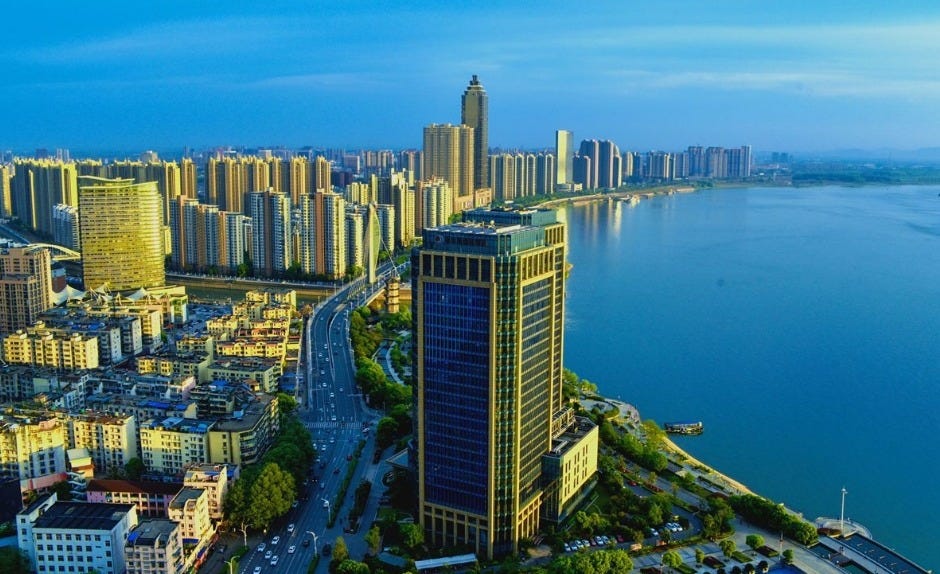
For decades, the playbook was consistent.
If you were a city without special favor; no coastal port, no policy zone, no natural endowment you competed the only way you could. You built an industrial park. You offered tax holidays. You cut ribbons and waited for someone else’s factory to land. The game was attraction. The prize was mobile capital. And the rules were simple: prepare the soil and hope seeds blow in.
Most cities lost. The seeds landed elsewhere. The soil stayed empty.
Wuhu played this game once. Then it stopped.
In 1997, this mid sized Yangtze River port had nothing that should have attracted an auto industry. What it had was a failing parts workshop, a leaky roof in the president’s office and a government willing to do something unusual. Instead of waiting for a manufacturer to arrive, it decided to become one. Instead of bidding for someone else’s anchor, it built its own.
That bet became Chery. That workshop became a national champion. And that single anchor pulled an entire ecosystem into existence around it; suppliers, spin offs, drones, aircraft components, the world’s largest battery maker locking itself into Wuhu’s stack.
The city that could not attract gravity became gravity.
This essay steps back from the mechanics of how Wuhu did it. The Deep Dive, Wuhu: The City that birthed its own Engine already gave us that. Here we are looking at what the city’s experiment reveals about the assumptions underlying industrial competition. What does it mean that a replaceable port with no advantages built something no incentive package could steal? How does Wuhu’s founding logic connect to other cities in this series. Why does this moment; the EV transition, the low altitude economy, the exhaustion of the bidding model; finally belong to Wuhu? And what comes next for a place that succeeded so completely that it no longer qualifies as the underdog?
For anyone who has ever assumed they lacked the advantages to build something of their own: this is what it looks like when someone decides that waiting is not the only option. The conditions are specific. They are also transferable.
The deep dive tracked the mechanism.
This is about what the mechanism means, where it points and what it asks of anyone still waiting.
The City That Became Its Own Destination
Why This City Exists at All
Most Chinese cities exist because something arrived before them.
A river narrowed for navigation. A railway junction. A policy designation. A factory relocated from the coast. The city formed around the thing that landed there and its purpose was to serve that thing; house its workers, process its inputs, collect its taxes. The city was the host. The anchor was the guest.
Wuhu was never supposed to be different.
Its location on the Yangtze, midway between Nanjing and Hefei, gave it function but no destiny. It was a transshipment point, a place where goods paused before continuing elsewhere. The city existed to move what others made. This was the baseline condition of inland urban China: geography conferred utility, not gravity. You could be useful. You could not be necessary.
What changed was not the river. What changed was the recognition that utility is replaceable.
A port that only moves goods competes with every other port. A city that only hosts industry competes with every other city offering tax breaks. The bidding war for mobile capital is a race to the bottom because the thing you’re bidding for can always leave. It arrived somewhere else before. It can arrive somewhere else again.
Wuhu’s founding insight; the one that separates it from every other river town that kept waiting, was that the only asset that cannot be bid away is the one you build yourself.
This is why the city exists in its current form. Not because a factory landed there. Not because policy favored it. But because in 1997, it made a decision that most cities never make: to stop preparing the soil and start becoming the seed. To bear the risk of founding rather than the certainty of hosting. To build the anchor rather than wait for one to arrive.
The city that existed to serve became the city that built. That is the origin story at systems level. Everything else; Chery, the suppliers, the drone spin offs, CATL’s lock-in, is just what happens after you stop treating yourself as replaceable.
The Company It Keeps.
How This City Connects To Others We Have Covered.
Wuhu belongs to a specific lineage in this series: cities that refused to wait..
Not every city in China makes this list. Most are still preparing soil, cutting ribbons, hoping. But the ones we have traced share a common refusal; a decision that the passive model is not the only model. Wuhu’s particular innovation was to build its own anchor. But around it, in the mental map taking shape, are other cities that solved related problems through different means.
Start with Golog.
Golog understood that sovereignty flows from controlling the non-negotiable asset. In its case, the asset was given: the headwaters of the Yellow River. No one could replicate it. No one could bid it away. Golog’s task was to secure what it already possessed; to become the guardian of something no one else could claim.
Wuhu had no such inheritance. There was no asset. There was only a failing workshop and a leaky roof. So Wuhu did something harder: it created the asset. Where Golog secured the anchor, Wuhu built it. Same principle; anchor as source of gravity, but one city inherited, the other invented.
Then Hsinchu.
Hsinchu engineered gravity through talent. It built the research institutes, designed the diaspora return loop, anchored the intellect that would generate industry. Its raw material was human capital, trained elsewhere, pulled back home.
Wuhu’s raw material was state capacity; patient capital, existential risk tolerance, a government willing to be founder rather than facilitator. Different inputs, same outcome: gravitational engineering. One anchored minds, the other anchored metal.
Then Yulin.
Yulin faced obsolescence. Coal was dying and with it the city’s reason for being. But Yulin understood that a dying asset still has value on the way out. It weaponized coal’s final profits to finance the bridge to whatever came next.
Wuhu also faced obsolescence; not of an industry, but of a function. A replaceable river port has no future. But Wuhu had no dying asset to monetize. No coal to sell on the way down. It had only the willingness to start from nothing. Yulin paid for its transition. Wuhu built its transition from scrap.
Then Wuxi..
Wuxi fabricated a new reality atop scarred foundations. It took what was broken and engineered a closed loop premium experience; turning liability into asset through curation.
Wuhu also fabricated a new reality. But where Wuxi curated, Wuhu built. One created an experience. The other created an industry. Both are acts of imagination imposed on unpromising ground.
Then Hefei.
They sit in the same province, two hours apart.
Hefei attracted Nio. It placed the bets, offered the terms, convinced the anchor to land. This is the state as venture capitalist; using policy, capital and patience to pull gravity into existence.
Wuhu built Chery. It started from a failing workshop, a returning engineer, a government willing to bear existential risk. No one was convinced. No terms were offered. The anchor was built, not attracted.
Both cities now sit at the center of the same transformation; EVs, batteries, the new energy stack. Both have anchors that define ecosystems. But they arrived here through different paradigms.
Wuhu built first. For years, Chery was the quiet success in the neighborhood; the river town automaker that kept growing, kept expanding, kept pulling suppliers into its orbit. While Hefei was still finding its footing as a capital, Wuhu was already building.
By the time Hefei placed its bet on Nio, the future was already visible. And it looked a lot like what Wuhu had been building all along.
The provincial capital, seeing where things were headed, acted accordingly. It poured resources into becoming the new energy hub it is today. It courted anchors, built ecosystems, placed its gambles. Wuhu had shown what was possible. Hefei decided it wanted a piece of that future too.
Now Hefei allocates capital across Anhui, and Wuhu generates the gravity that attracts that capital back. The city that built its own anchor has become an anchor for others. The provincial capital that once watched from a distance now builds alongside.
Same destination, opposite journeys. But the journey Wuhu took made the destination visible for everyone else.
Finally Xiong’an.
Xiong’an built the operating system first; digital governance, infrastructure, the future’s foundation layer, before anyone lived there. It understood that if you build for what is coming, what is coming will have no choice but to cluster around you.
Wuhu did the same, in a different domain. It built the industrial anchor first; Chery, then suppliers, then spin offs, then CATL locking itself in. It understood that if you build the thing that makes an ecosystem necessary, the ecosystem will build itself around you.
Xiong’an built the future’s OS. Wuhu built the future’s engine.
What connects them all
None of these cities waited for gravity to arrive. Golog guarded what it had. Hsinchu pulled back what had left. Yulin monetized what was dying. Wuxi engineered atop what was broken. Hefei bet on what could be. Xiong’an built for what would come.
Wuhu built what did not exist.
That is its place in the company it keeps: not the only city that refused to wait, but perhaps the one that started with the least and built the most from it.
What Beijing Sees When It Looks at Wuhu
Why This City Matters to China
From Beijing’s altitude, most cities are interchangeable.
Not in sentiment. Not in pride. But in function. A city’s job is to execute; to implement policy, to generate growth, to maintain stability. If one falters, another can be elevated. If one succeeds, the template can be exported. The system is designed for substitutability. No single node is meant to be irreplaceable.
Wuhu is the exception.
When Beijing looks at Wuhu, it does not see a successful automaker. It does not see an industrial park or a tax revenue line. It sees something rarer: a proof case that cannot be replicated through directive.
Most of us spend our lives waiting for someone to notice us. To pick us. To give us a chance. Wuhu did something else. It stopped waiting and built the thing that made itself impossible to ignore. The question Wuhu answered is the same one sitting on your desk right now. You just haven't named it yet.
