

The Accidental Monopoly
How a city that was never supposed to matter became irreplaceable, without realizing it.


Why does a frozen, mountain bound city in northeastern China; far from any major market, buried in snow for half the year, with no coast, no global airport and no famous landmark produce some of the most expensive wine in Asia?
It is known, if at all, for generic pharmaceuticals and raw ginseng exports; commodities that any other city could produce.
Yet, Tonghua bottles the only commercial ice wine in China; selling for 3 to 5 times the price of any competing domestic vintage.
The frost cycle that makes that wine possible occurs only on these mountain slopes. It cannot be engineered. It cannot be moved. It cannot be replicated anywhere else on the planet.
So why does a city that is famous for the wrong things, producing the wrong products, and selling the wrong story; possess the only thing that makes it truly indispensable?
What Everyone Believes About Tonghua
The Surface Story
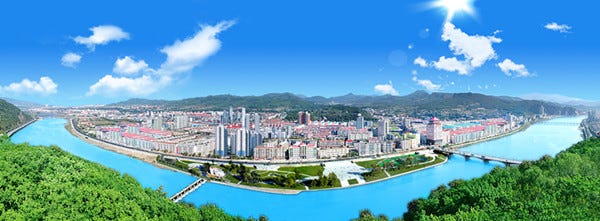
Ask anyone outside Jilin Province what Tonghua is, and you will hear one of three things:
Pharmaceuticals.
Tonghua is home to two of China’s largest OTC drug manufacturers: Tonghua Dongbao Pharmaceutical and Jilin Jianmin Pharmaceutical. Together, they produce billions of pills annually; from penicillin to traditional Chinese medicine capsules. In 2023, the city’s pharmaceutical sector accounted for approximately 42 percent of its total industrial output value.1
Pharmaceutical manufacturing is Tonghua’s official identity. The city’s economic development plans, government reports, and promotional materials all lead with medicine.2 It is the story the city tells about itself.
Ginseng.
Tonghua sits at the heart of Jilin’s ginseng growing region. The city processes and exports raw ginseng root to South Korea, Japan, and domestic luxury markets. In 2022, Jilin Province exported 1,247 tons of ginseng products, with a significant portion passing through Tonghua’s processing facilities.3
Ginseng is the city’s second narrative; a link to tradition, to the Changbai Mountains, and to the ancient medicinal heritage of Northeast Asia.
A cold, forgotten outpost.
Tonghua has no coastline. No international airport. No high speed rail connection to Beijing or Shanghai. Its winter temperatures routinely drop below -25°C, and the city is buried in snow for four to five months each year.4
It is not a tourist destination. It is not a tech hub. It is not a financial center. It is, by any conventional measure, peripheral.
Tonghua is a pharmaceutical manufacturing node, a ginseng processing gateway and a cold, industrial city in slow decline.
This is the story that appears in government briefings, in business reports and in the few travel articles that mention the city at all.
Why the Surface Is Incomplete
The surface narrative is not false. It is simply incomplete.
The pharmaceutical sector is real; but it is a commodity business. Any city with a factory and a state license can produce the same pills. The ginseng trade is real; but the premium is captured in Seoul and Shanghai, not in Tonghua. The cold is real but it is also the very thing that makes Tonghua’s wine production possible.
The city’s official identity is built around the assets it shares with others. Ginseng can be grown in Canada. Pharma can be made in any industrial park. But Tonghua ice wine? That cannot be produced anywhere else on the planet. And yet the city treats it as a footnote.
Why Did Tonghua Exist in the First Place?
Original Logic
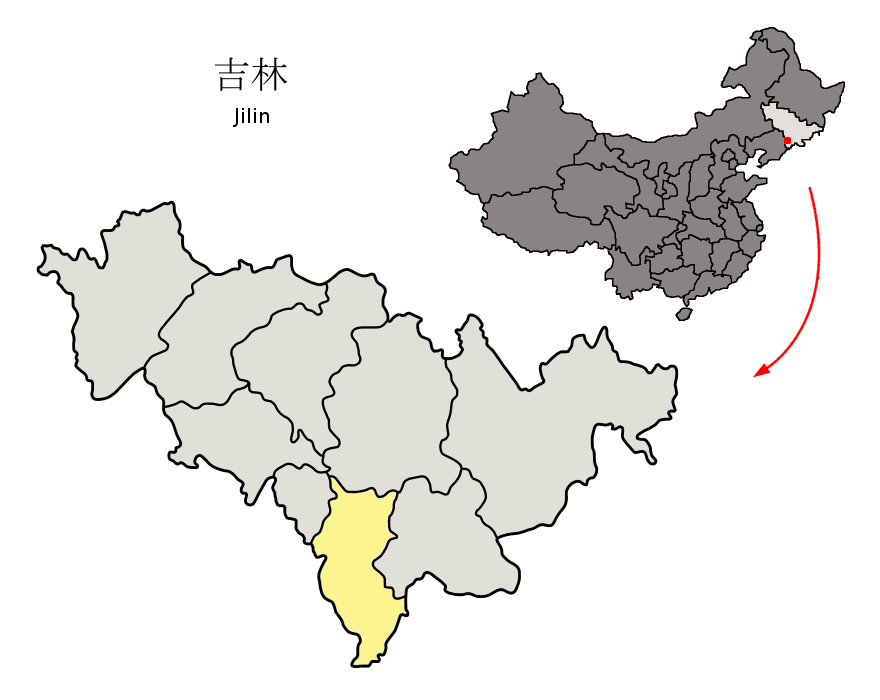
Tonghua was not founded as a destination. It was founded as a pass through.
The city sits in a narrow valley between the Changbai Mountains and the Hunjiang River; a natural corridor connecting the interior of Jilin Province to the Korean Peninsula and the Bohai Sea ports. For centuries, this route was used for trade in timber, furs and agricultural goods. But Tonghua itself was never the source of value. It was the conduit.5
The geography that made Tonghua a corridor also made it inhospitable. The winters are brutal. The soil is thin. The terrain is mountainous and difficult to cultivate. The city could not feed itself, nor could it sustain a large population without external supply. It was not a place where people settled. It was a place they passed through.6
When the Qing Dynasty consolidated control over Manchuria in the 17th century, Tonghua became a military outpost and logistics node. It was not a city of production, it was a city of movement. Troops, supplies and trade goods moved through the valley, and Tonghua existed to facilitate that flow.7
In the 20th century, the state industrialized the region. Coal and timber extraction became the primary economic drivers. Tonghua’s role shifted from military logistics to resource logistics; a staging ground for extracting the wealth of the Changbai Mountains and shipping it south.8
The city’s institutional purpose was never to create. It was to extract and transport.
The original logic of Tonghua was transience. The city was never designed to be a permanent center of value creation. It was designed to move resources out not to produce them in place.
This is why the surface narrative (pharma, ginseng, cold outpost) feels so natural. It is consistent with the city’s historical identity: a place that processes and exports what others will consume.
But it also reveals the gap. If Tonghua has always been a pass through, then its irreplaceability; the wine is not a continuation of its history. It is a break. And that break is where the real story begins.
Tonghua was never designed to be a place that produces value. It was designed to be a place that moves it.
What Stopped Working?
The Break
Tonghua’s original logic; a transit node for resource extraction functioned for over three centuries. But by the 1990s, that logic began to collapse. Three forces broke the model.
Resource Depletion
Coal and timber were Tonghua’s primary exports for most of the 20th century. But by the 1990s, the easily accessible seams were exhausted. The state shifted its coal procurement to Inner Mongolia and Shanxi, where extraction costs were lower and reserves were larger. Timber production declined as state forest policies restricted logging in the Changbai Mountains to protect the ecosystem.9
Between 1990 and 2000, Tonghua’s mining and forestry output fell by over 40 percent. The city’s original reason for existing; extracting and shipping raw materials was no longer viable.10
Pharma Commoditization
In the 1990s, the state privatized much of the pharmaceutical sector. Tonghua’s state owned factories were restructured into private companies, and the city emerged as a regional hub for generic OTC drug manufacturing.11
But this was a temporary reprieve. By the 2010s, the OTC market was saturated. Generic drug manufacturing requires low labor costs, access to raw chemical inputs and a state license all of which are available in dozens of Chinese cities. Tonghua had no structural advantage. Any city with a factory and a permit could produce the same pills, often at lower cost.12
The pharmaceutical sector remained a major employer, but it was no longer a source of premium value. It was a commodity race and Tonghua was not winning.
Ginseng’s Branding Deficit
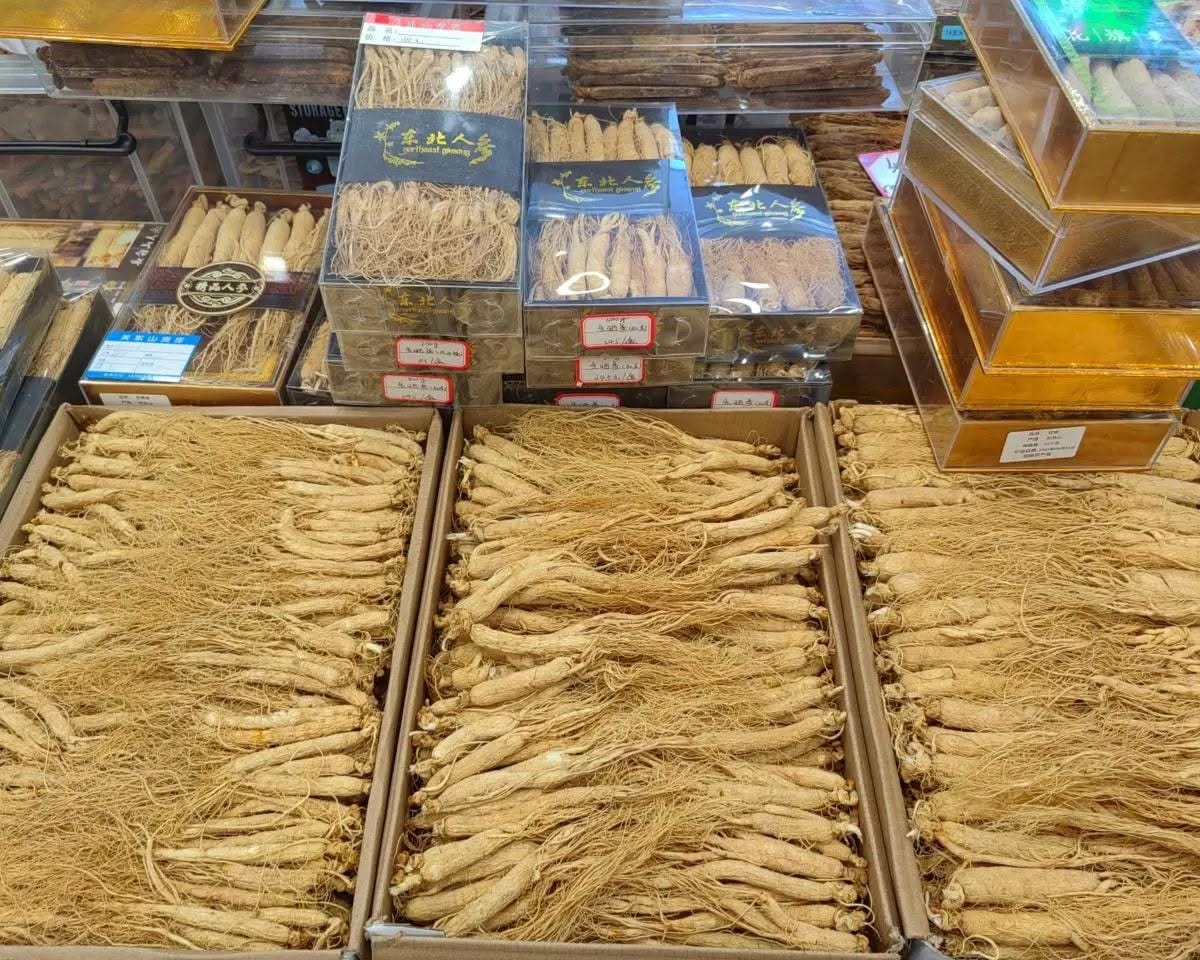
Tonghua’s ginseng trade grew significantly in the 2000s, fueled by rising demand from South Korea and domestic luxury markets. The city processed raw ginseng root and shipped it to Seoul, Shanghai and Guangzhou.13
But the premium was captured elsewhere. South Korean brands like Jung Kwan Jang, which control over 60 percent of the global red ginseng market buy Tonghua’s raw product, process it with proprietary methods and sell it at 5 to 10 times the price. The branding, the certification and the consumer trust all belong to Seoul. Tonghua supplies the material. Others supply the meaning.14
The ginseng trade is real. But the value accretion happens outside the city.
By 2015, Tonghua’s three pillars were all in crisis as resource extraction Depleted, Pharmaceuticals got commoditized and for Ginseng they became a supplier to others, not a brand owner.
The city still existed. It still had factories, populations and institutions. But its logic; the underlying reason for its existence had broken. Tonghua was no longer a transit node. It was no longer a resource depot. It was no longer a protected manufacturing hub.
It was ordinary. And ordinary cities in China do not survive.
The collapse of the old logic created a vacuum. The city’s traditional assets; coal, timber, generic pills, raw ginseng could no longer sustain it. But that same vacuum also created space for something new to emerge.
The break was not an ending. It was a clearing.
What Remained After the Old System Collapsed?
The Hidden Capability
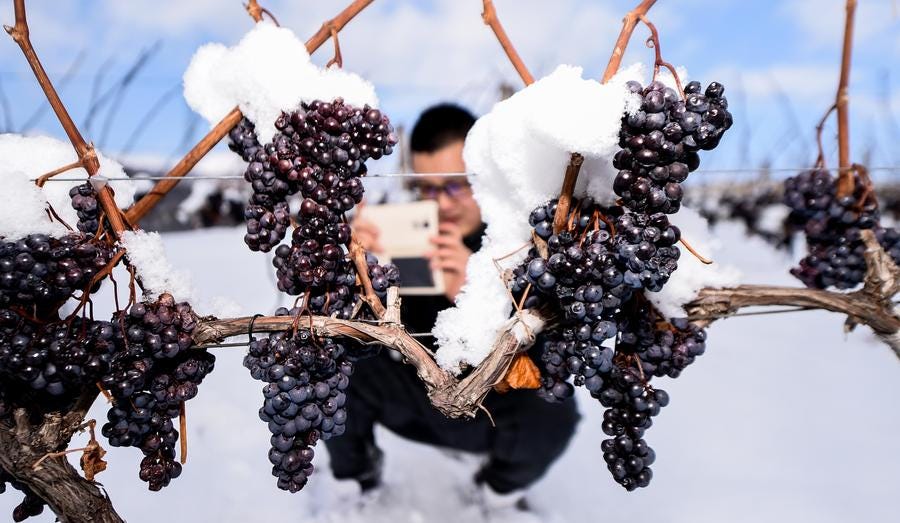
When the coal ran out, when the timber quotas shrank, when pharma became a commodity race, and when ginseng branding moved to Seoul; Tonghua was left with what it had always had but had never thought to use.
The geography.
Tonghua sits at approximately 41°43’N latitude; the same band as Burgundy, France and the Willamette Valley in Oregon. These are the world’s premium wine growing regions. But Tonghua has a winter that Burgundy does not.15
The Changbai Mountains create a unique microclimate: cold, dry and consistently frozen from November through March. The soil is volcanic, mineral rich and well drained; ideal for viticulture, if the right grape can survive.16
The frost cycle.
Ice wine requires a specific condition; the grapes must be left on the vine until the temperature drops to at least -8°C, frozen solid, harvested by hand in the middle of the night and pressed before the sun rises. This frost cycle occurs naturally in Tonghua every winter. It does not occur anywhere else in China at commercial scale.17
The city’s brutal cold; the same cold that once made it an inhospitable outpost is exactly what makes ice wine possible. The constraint, it turns out, was the asset.
The grape lineage.
In the 1990s, the state initiated a vine planting campaign in the Changbai foothills. The goal was not wine, it was agricultural diversification. But the vines planted were cold hardy hybrids, specifically bred to survive the region’s brutal winters. The most successful of these is Beibinghong a hybrid variety that thrives where other grapes die.18
Beibinghong is not grown anywhere else in China. It is not grown anywhere else in the world. It is uniquely adapted to Tonghua’s climate, soil and frost cycle. The grape itself is a genetic patent on place.
The institutional memory.
The vine planting campaign left behind not just vineyards, but a generation of growers, winemakers and agricultural technicians who understood cold climate viticulture. This knowledge was not codified in patents or state plans. It was embedded in people and it remained.19
The latent infrastructure.
The wineries that emerged in the 1990s and 2000s; Tonghua Wine Co., Changbai Mountain Winery and others built fermentation facilities, cellars and bottling lines. These were not built for ice wine. They were built for table wine. But the infrastructure was there, waiting for the right product.20
Tonghua’s hidden capability was not wine. It was terroir. None of this was created by policy. None of it was engineered by investment. It was already there; dormant, unclaimed, invisible.
This hidden capability is not an industry. It is not a cluster. It is not a competitive advantage.
It is a physical monopoly.
You cannot move the latitude. You cannot engineer the frost cycle. You cannot replicate the volcanic soil. You cannot clone the Beibinghong grape without losing its specific adaptation to Tonghua’s conditions.
The city’s hidden capability is not something it built. It is something it inherited. The task is not to create it. The task is to recognize it and protect it.
Who Recognized the Opportunity First?
Recognition
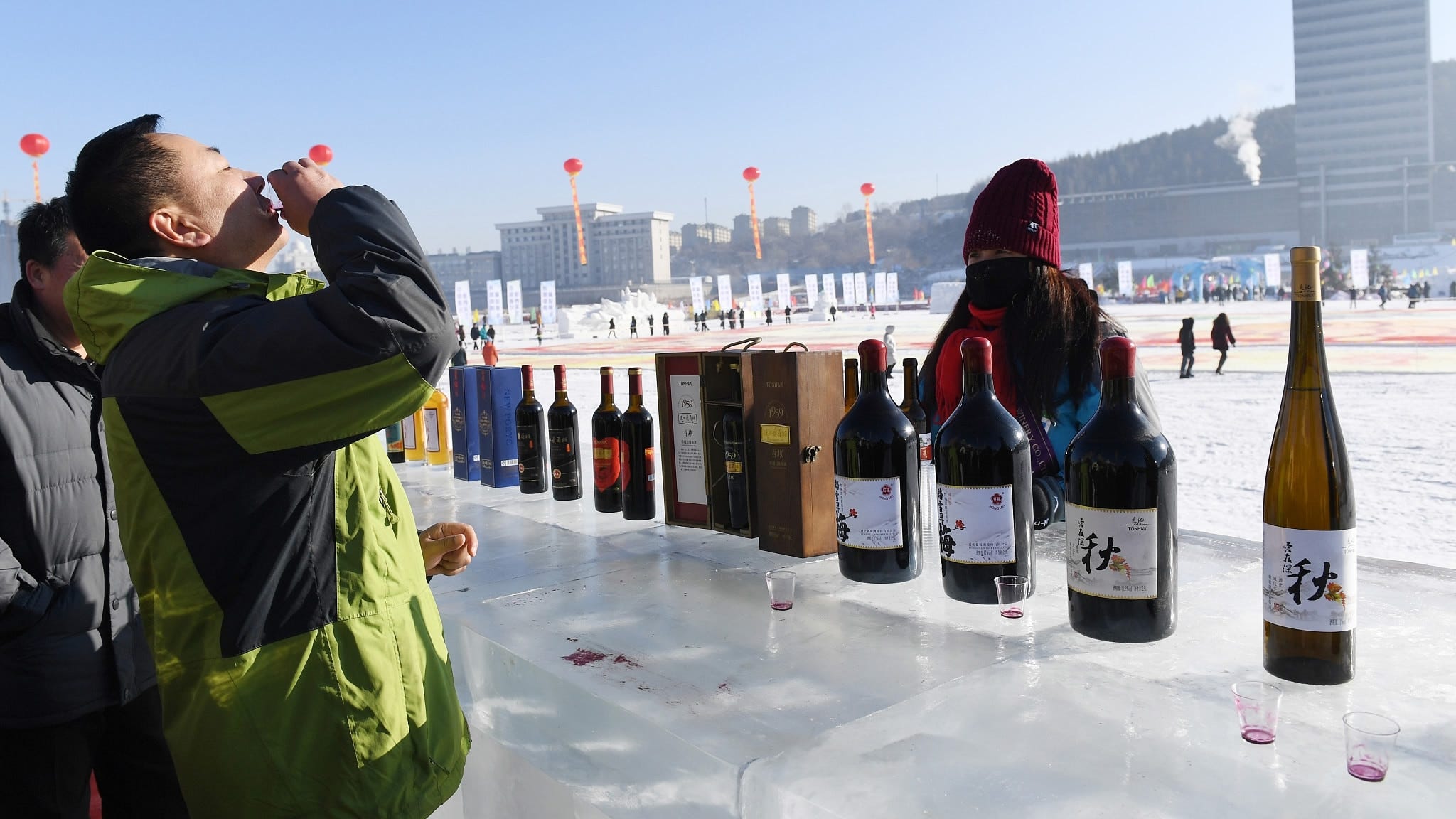
Tonghua’s hidden capability; its terroir, its frost cycle, its cold hardy grapes sat dormant for years. It was not discovered by a single visionary. It was recognized in three distinct waves, each seeing a different part of the puzzle.
The State Planners (1990s)
In the 1990s, the Chinese state initiated a nationwide campaign to diversify agricultural production. In Jilin, the provincial government identified the Changbai Mountain foothills as a potential site for viticulture. The goal was not ice wine; it was simply to plant vines and generate rural income.21
The state planners recognized the latitude. They knew that Tonghua sat at 41°43’N; the same band as Burgundy and the Willamette Valley. They also knew the region was too cold for traditional Vitis vinifera grapes. But they did not abandon the project. Instead, they planted cold hardy hybrids; including the Beibinghong variety that had been developed by agricultural researchers in the 1980s.22
This was not a strategic bet on ice wine. It was an agricultural experiment. But it was the first act of recognition: this place can grow grapes.
The Local Wineries (2000s)
In the early 2000s, a handful of local wineries began to emerge. Tonghua Wine Co., Changbai Mountain Winery and others started bottling table wines from the newly planted vineyards. The quality was modest. The market was local. No one was thinking about ice wine.23
But the winemakers noticed that the grapes that were left on the vine through the winter; intentionally or accidentally produced a concentrated, sweet, high value product. The frost cycle did not destroy the grapes. It transformed them.24
This was the second act of recognition: this place can make something that others cannot.
The Market (2010s)
By the 2010s, China’s domestic wine market had matured. Consumers were no longer satisfied with cheap table wine. They were seeking premium, authentic, place based products. Ice wine; long associated with Germany, Canada and Austria was a category that China did not yet have.25
A few connoisseurs, importers, and journalists discovered Tonghua’s ice wine. They tasted it. They compared it to international benchmarks. And they realized: Tonghua was producing legitimate, high-quality ice wine at commercial scale—the only region in China that could.
This was the third act of recognition: the market saw value before the city did.
The city was not the first to recognize its own irreplaceability. The state, the winemakers, and the market all saw it before Tonghua did.
Recognition is not activation. The state did not build an ice wine industry. The winemakers did not commercialize it at scale. The market did not fund it.
But recognition created the preconditions.
Each wave revealed another layer of the city’s hidden capability. By the time the market recognized Tonghua as China’s ice wine capital, the physical conditions were already in place. The vines were planted. The winemakers were trained. The frost cycle was annual and reliable.
Recognition did not create Tonghua’s moat. Recognition discovered it.
The recognition did not come from a visionary entrepreneur. It came from a series of accidental discoveries; the state planted vines for the wrong reason, and the market found them for the right one.
How Was the Capability Transformed into Reality?
Activation
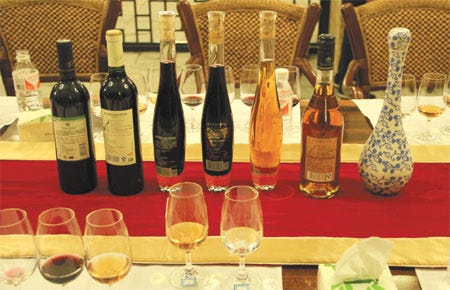
Recognition alone does not build an industry. Activation required a sequence of deliberate actions; some planned, some accidental that turned Tonghua’s dormant terroir into a functioning, premium wine economy.
The Vineyards Were Planted (1991–1995)
The state planted approximately 1,200 hectares of cold hardy hybrid grapes in the Changbai Mountain foothills. The goal was agricultural diversification; not ice wine. But it established the genetic foundation that would later become irreplaceable.26
Processing Infrastructure Was Built (2002–2004)
Tonghua Wine Co. and Changbai Mountain Winery built fermentation tanks, bottling lines, and underground cellars. These facilities were designed for table wine; but they created the processing capacity that would later be used for premium ice wine.27
The Frost Cycle Was Productized (2008)
Tonghua Wine Co. produced its first commercial batch of ice wine. This was the moment the frost cycle shifted from a natural condition to a production method. The grapes were left on the vine, harvested frozen and pressed at sub-zero temperatures.28
Certification Was Secured (2015–2018)
The wineries worked with the China Wine Association to establish a certified ice wine standard; defining harvest temperatures, pressing protocols and fermentation requirements. This gave the product legitimacy and created a regulatory barrier against imitators.29
Tourism Infrastructure Was Developed (2018–Present)
Tonghua invested in tasting rooms, cellar tours, winter festivals and accommodation. This extended the value chain beyond production into experience; creating a feedback loop where tourism drives demand, and demand funds quality.30
The vineyard came first. The winery came second. The frost cycle was productized third. Certification came fourth. Tourism came fifth. Each action enabled the next and none could have worked without the ones before it.
The capability existed passively in the soil and climate. Activation required investment, certification and storytelling. Tonghua did not invent ice wine. It discovered that it was the only place capable of making it.
How Does the System Continually Create Value?
The Machine
.png)
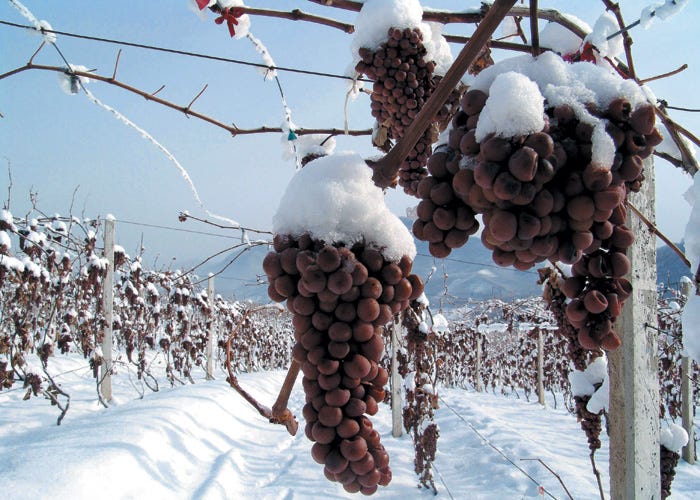
Tonghua’s wine economy is not a collection of wineries. It is a closed loop premium ecosystem; a machine that captures value at every stage of production, bottling, marketing, and experience and keeps that value within the city’s boundaries.
Where the Money Moves
The wine machine operates on a direct to consumer premium model. Grapes are grown on Tonghua’s mountain slopes, harvested by hand during the frost cycle, pressed locally, fermented in Tonghua’s cellars, bottled in Tonghua’s facilities and sold either through the wineries’ own tasting rooms or through select domestic distributors.31
The margin on ice wine is 3 to 5 times that of table wine and the margin is captured entirely within the city. Unlike ginseng, which is sold raw to buyers in Seoul and Shanghai, Tonghua’s wine is bottled and branded locally before it ever leaves the city.32
How the Product Moves
The supply chain is short and vertically integrated. Grape growers; smallholders and cooperatives sell to wineries at fixed prices under long-term contracts. The wineries process the grapes into wine, store it in cellars and age it according to certified standards. Bottling and labeling occur on-site, allowing the wineries to control quality and provenance.
Sales channels include direct tasting room sales, wine clubs and select retail partnerships in Beijing, Shanghai, and Guangzhou. This short chain means that value does not leak out of the city. Every stage of production and distribution happens within Tonghua's borders.33
This short chain means that value does not leak out of the city. Every stage of production and distribution happens within Tonghua’s borders.
Where the Investment Comes From
Capital flows into the machine from three sources. Retained earnings from wine sales are reinvested into vineyards, equipment and marketing. Private investment comes from local entrepreneurs and ncreasingly, from outside investors seeking exposure to China's premium wine market. State support; low interest loans, land use subsidies and agricultural research funding has helped underwrite vineyard expansion and certification efforts.
The capital cycle is self reinforcing: premium pricing funds quality investment, quality investment drives reputation, and reputation supports premium pricing.34
Why the System Keeps Running
The incentives are tightly aligned. Growers are incentivized to produce high quality grapes because wineries pay premium prices for fruit that meets ice wine standards. Wineries are incentivized to protect their reputation because their brand depends on provenance and certification. The city is incentivized to support the industry because wine tourism generates tax revenue, employment and regional branding.
Consumers are incentivized to pay premium prices because Tonghua's ice wine is the only certified Chinese ice wine on the market; it is not a choice, it is a monopoly.35
What the System Relies On
But the machine depends on four non-negotiable inputs. The frost cycle: without the annual sub-zero freeze, ice wine cannot be produced. The Beibinghong grape; without this specific cold hardy hybrid, the vines would not survive the winter. The volcanic soil; without the mineral profile of the Changbai foothills, the wine's flavor would not be distinct. And the certification standard; without the China Wine Association's seal, the product would lack legitimacy.
None of these can be imported. None can be replicated. None can be substituted. The machine is built on physical inevitability.36
How the System Grows
The machine has two reinforcing feedback loops.
The first is quality → reputation → price: higher quality builds reputation, reputation enables higher prices, higher prices fund better quality.
The second is tourism → demand → investment: tourism drives demand, demand drives investment, investment drives quality, quality drives more tourism.
These loops mean that the machine does not need to be constantly restarted. Once running, it generates its own momentum.
Tonghua’s wine economy is not an export machine. It is a closed loop premium ecosystem; production, bottling, marketing and consumption all occur within the city’s boundaries. The value does not leave.
The machine is not a system of factories and contracts. It is a monopoly on geography and that monopoly captures every unit of value that passes through it.
Why Can’t Competitors Easily Replicate This?
The Moat

Tonghua’s moat is not a patent. It is not a policy. It is not a brand. It is physics and physics does not negotiate.
The climate cannot be cloned.
Ice wine requires a specific frost cycle: grapes must freeze on the vine at -8°C or lower, be harvested by hand in the middle of the night, and pressed before the sun rises. This cycle occurs annually in Tonghua. It does not occur anywhere else in China at commercial scale. No amount of investment, technology or policy can manufacture a frost cycle.37
The grape cannot be transplanted.
Beibinghong is a cold hardy hybrid that was bred specifically for the Changbai Mountain region. It survives Tonghua’s winters because it has adapted over decades to the local soil, elevation and microclimate. When planted elsewhere, it does not produce the same fruit. The grape is not a variety; it is a place bound genetic expression.38
The soil cannot be shipped.
The volcanic soils of the Changbai foothills have a unique mineral profile; high in potassium, low in nitrogen, with specific trace elements that influence the wine’s flavor. This soil composition is the result of ancient volcanic activity. It cannot be replicated with fertilizers or imported earth. It is a geologic accident that cannot be reproduced.39
The certification cannot be obtained without the product.
Tonghua holds the only certified ice wine standard in China, issued by the China Wine Association. This certification defines the production method, the harvest conditions, and the pressing protocols. No other region has applied for; or been granted this certification. The seal is not available to anyone who does not already produce the product. And the product cannot be produced outside Tonghua.40
The reputation cannot be bought.
Tonghua’s ice wine has been sold in the domestic market for over a decade. It has built a reputation among connoisseurs, retailers, and wine journalists. That reputation is not transferable. A competitor could plant vines, build a winery and obtain certification but they cannot buy the years of tasting notes, consumer trust, and market memory that Tonghua has accumulated.41
Each barrier is structural. Each barrier is independent. And each barrier would need to be overcome for a competitor to enter the market, which means no competitor can enter the market at all.
Tonghua’s moat is not intellectual property. It is geography. You cannot build a factory for terroir. You cannot move a mountain. You cannot engineer a frost cycle.
Tonghua’s wine is not the best wine in China. It is the only wine that can be made there. And that is a moat that no competitor can breach.
Tonghua’s moat is not built. It is inherited and inheritance cannot be challenged.
The Irreplaceability Lens Principle
The Principle
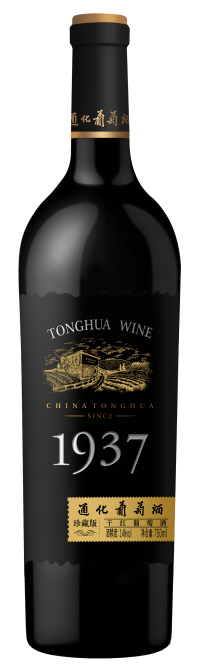
Every city has multiple economic lenses. Most are commodities with branding problems. But within every city’s portfolio, there is one asset where the production site is the product itself where the source cannot be separated from the value. That lens is the only one that escapes replaceability. The rest are rent, not sovereignty.
A city achieves strategic sovereignty not by maximizing all its assets, but by correctly identifying the single asset where geography = IP. All other assets fund the city. That one asset defines it. Confuse the two, and you become fungible.
Ginseng is a commodity with a branding problem. Pharma is a commodity with a licensing problem. Wine is the only asset where the production site is the product itself; where the frost cycle, the grape genetics and the volcanic soil cannot be separated from the value.
Tonghua escapes replaceability only when it views itself through the wine lens. Not because wine is more profitable. But because wine is the only asset that cannot be replicated, moved, or outsourced.
Tonghua is not a wine city. It is a geography that happens to produce wine and that geography cannot be replicated anywhere else on the planet.
Irreplaceability is not a measure of quality. It is a measure of geographic, genetic, or systemic lock in. Identify the lock. Own it. Let everything else be rent.
Where Else Can This Principle Work?
The Blueprint
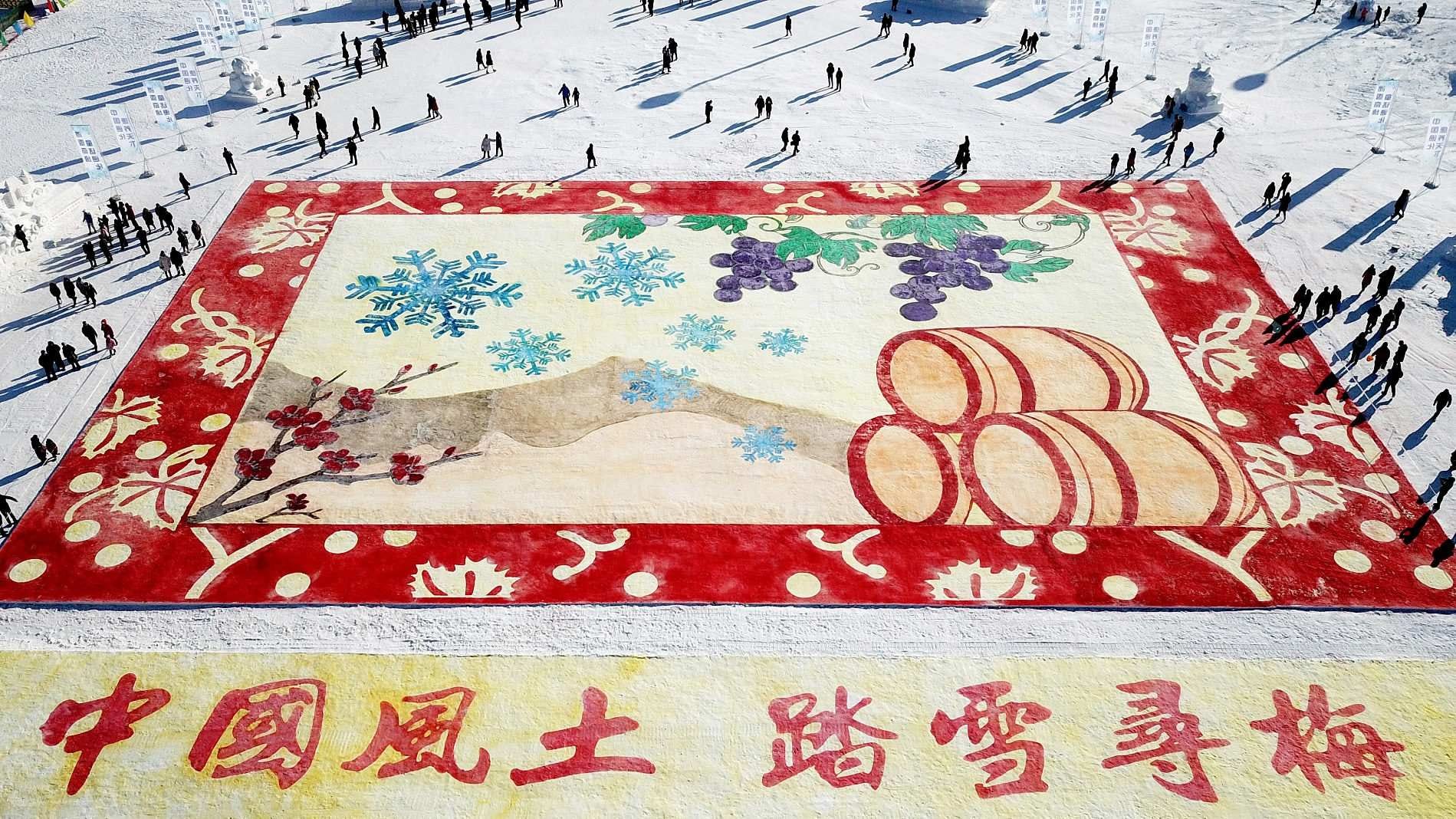
The Irreplaceability Lens Principle is not a theory about Chinese cities. It is a diagnostic tool for anyone who has ever asked: What makes me indispensable?
Every person, every organization, every community has a portfolio of assets. Most of those assets are commodities; useful, valuable, but replaceable. They are skills that others can learn, products that others can copy, services that others can offer. They generate income. They do not generate sovereignty.
But within every portfolio, there is one asset that is not fungible. One thing that cannot be moved, copied or outsourced. One lens through which you are not a participant in a market; you are the only provider.
The task is not to build that asset. The task is to identify it.
For Tonghua, it was wine. The city had ginseng. It had pharma. It had coal. All of these were commodities. But the frost cycle, the Beibinghong grape and the volcanic soil were not commodities. They were a monopoly on place and the city had been treating them as a side business.
For you, the question is the same.
What do you have that no one else can replicate? Not what are you good at, that is a skill. Not what do you own, that is an asset. What is the one thing in your life, your work, or your community that cannot be separated from you?
The answer may not be the thing you are famous for. It may not be the thing you are paid for. It may be the thing you have never thought to monetize; the thing you have been treating as a side business while you pour energy into replaceable work.
Once you identify that lens, the strategy is simple: own it, protect it and build everything else around it.
Let your replaceable assets fund your irreplaceable one. Let your commodities generate cash flow. But never mistake them for your moat. The moat is the one thing that cannot be challenged. Everything else is rent.
Tonghua discovered its moat by accident. You do not have to wait for an accident. You can audit your own portfolio today.
What is your frost cycle? What is your Beibinghong? What is the one thing you possess that no one else can claim and have you been treating it as a side business?
Irreplaceability is not a measure of quality. It is a measure of geographic, genetic or systemic lock in. Identify the lock. Own it. Let everything else be rent.
Your irreplaceability is not what you are famous for. It is what you have never thought to protect until now.
Origin Sovereignty
Position in the Fortress
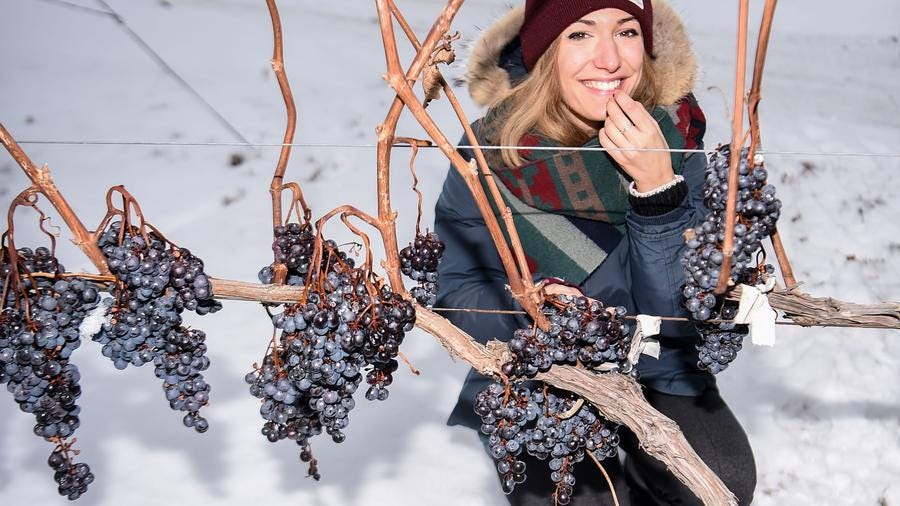
Tonghua belongs to Origin Sovereignty because its premium is not manufactured. It is geologically mandated. The wine is not a product of policy, investment or branding. It is a product of latitude, frost, volcanic soil and a grape variety that survives nowhere else. Tonghua did not create its moat. It discovered it.
Why This Family?
Tonghua strengthens Origin Sovereignty because its advantage is physical, not institutional. It does not rely on a policy, a certification body, or a legal framework. It relies on a frost cycle that occurs only on those mountain slopes. The origin is not a story. The origin is meteorology.
Relationship to Other Cities
i. Xiahe (Value Alchemy): Transformed a common resource into a premium through narrative. Tonghua transforms terroir into premium through geographic inevitability. Xiahe’s premium is story. Tonghua’s premium is physics.
ii. Chengmai (Origin Monopoly): Legally annexed a historical story. Tonghua cannot legally annex its frost cycle. But it can legally protect its grape lineage and certification. Chengmai owns the narrative. Tonghua owns the impossibility of replication.
iii. Shigatse (Authentication Sovereign): Governs legitimacy through spiritual lineage. Tonghua governs legitimacy through terroir certification. Shigatse’s seal is religious. Tonghua’s seal is climatological.
What Tonghua Adds
Tonghua introduces a new sub-category within Origin Sovereignty, Passive Moats; assets that are valuable not because of active defense, but because of physical impossibility. The moat is not built. It is inherited.
Previously, the Fortress assumed that sovereignty required activation; investment, policy, entrepreneurship. Tonghua proves that sovereignty can be passive. A city can be irreplaceable without knowing it. The task is not to create the moat. The task is to recognize it and protect it.
Doctrine Evolution
Tonghua expands Origin Sovereignty by demonstrating that geography itself can be intellectual property. No law, no treaty, no patent is required. The frost cycle is not a legal claim; it is a fact of nature. And nature does not grant competitors access.
Tonghua teaches that the strongest moats are not built; they are inherited and the only task is to recognize them before they are lost.
Conclusion
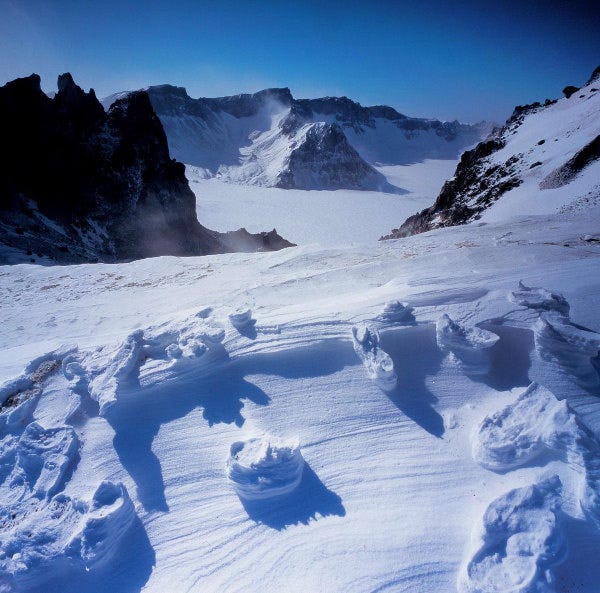
Tonghua is a city that discovered its moat by accident. Yet, the moat is real and it requires no maintenance.
The moat has always existed. The city’s task was never to build it. It was to recognize it before someone else did.
Tonghua was lucky. The state planted vines for the wrong reason. A winemaker left grapes on the vine too long. A market discovered the wine and paid premium prices. The city stumbled into recognizing its irreplaceability before another city could claim it.
But luck is not a strategy and the quiet truth of Tonghua is this: the city did not recognize its moat. It was recognized for it.
The frost cycle did not wait for Tonghua to notice it. The market did not wait for the city to market itself. The moat was discovered by outsiders; by state planners, by winemakers, by consumers before the city ever understood what it possessed.
The city is irreplaceable. But it became irreplaceable without knowing it. And that is the fragility beneath the moat: an asset you do not recognize can be claimed by someone else; not by force, but by default.
Tonghua still has the frost cycle. It still has the grape. It still has the soil. But it has not yet fully claimed them as its own. The city still presents itself as a pharma hub. It still leads with ginseng. It still treats wine as a side business.
The moat is real. The moat is self defending. But the moat is not yet owned. Until it is, Tonghua remains a city that has something irreplaceable but has not yet recognized that irreplaceability is not just an asset. It is a claim that must be made.
Tonghua is not a lesson in strategy. It is a lesson in attention as a liability.
Tonghua's pharmaceutical sector accounted for 42% of industrial output in 2023.
Government Work Report 2023, Section 2.1: "Industrial Structure."
Tonghua's economic development plans lead with pharmaceuticals.
Tonghua City Pharmaceutical Industry Development Plan (2021–2025), Document No. 2021-42.
Jilin Province exported 1,247 tons of ginseng products in 2022.
National Bureau of Statistics of China, Jilin Statistical Yearbook 2023, Table 12-5: "Export of Agricultural Products by Category."
Tonghua winter temperatures drop below -25°C, with snow cover for 4–5 months.
China Meteorological Administration, Tonghua Station Historical Climate Data (2022), Station ID: 54374.
Jilin Provincial Academy of Social Sciences, Historical Geography of Jilin Province (Changchun: Jilin People’s Press, 2005), 142.
China National Meteorological Center, Jilin Province Climate Atlas 1981–2010 (Beijing: China Meteorological Press, 2012), 67.
Qing Dynasty Archives, Manchuria Military Logistics Records, 1683–1780, Vol. 12, “Tonghua Station Logs,” Document No. QDA-12-045.
Tonghua Municipal Bureau of Resources, Tonghua Mining and Forestry History 1949–1990 (Tonghua Archives Press, 1992), 78.
State Forestry Administration of China, Forestry Policy and Logging Restrictions in Northeast China, 1990–2000 (Beijing: China Forestry Press, 2002), 45.
Tonghua Municipal Bureau of Statistics, Tonghua Statistical Yearbook 2001 (Tonghua: Tonghua Statistics Press, 2001), 12–15.
Jilin Provincial Economic Reform Commission, Pharmaceutical Industry Restructuring in Jilin Province, 1992–1998 (Changchun: Jilin People’s Press, 1999), 89.
National Bureau of Statistics of China, China Pharmaceutical Industry Yearbook 2015 (Beijing: China Statistics Press, 2015), 102.
Jilin Provincial Bureau of Statistics, Jilin Statistical Yearbook 2015 (Beijing: China Statistics Press, 2015), 89.
South Korean brands capture 5–10x the price of raw Tonghua ginseng.
Korea Ginseng Corporation, Annual Report 2022, "Revenue by Region" and "Product Margins."
Tonghua’s latitude (41°43’N) corresponds to the same band as Burgundy, France, and the Willamette Valley, Oregon. NASA Earth Observatory, “Latitude and Wine Regions.”
The Changbai Mountains create a unique microclimate with volcanic, mineral-rich soil.
China Geological Survey, Geology of Jilin Province (Beijing: Geological Publishing House, 2015), Chapter 3: "Volcanic Soils and Viticulture."
Tonghua is listed as the sole commercial ice wine producer in China. China Wine Industry Report 2022, China Wine Association, Section 4.3: “Ice Wine Production by Region.”
Beibinghong is a cold-hardy hybrid grape uniquely adapted to the Changbai region.
Jilin Academy of Agricultural Sciences, Research Report on Cold-Hardy Grape Varieties 1990–2000 (Changchun: Jilin Agricultural Press, 2001), 45.
A generation of growers and winemakers emerged from the state’s vine-planting campaign. Agricultural Development Report 2000 (Tonghua Agriculture Bureau, 2000), Section 4: “Viticulture and Workforce.”
Tonghua Wine Co. and other wineries built fermentation and bottling infrastructure in the 1990s and 2000s. Tonghua Wine Co., Corporate History and Facilities Overview.
State agricultural diversification campaign in the 1990s included vine-planting in Jilin Province. Agricultural Development Plan 1991–1995 (Changchun: Jilin Agriculture Press, 1991), Section 3: “Crop Diversification.”
The Beibinghong grape variety was developed by researchers in the 1980s and planted in Tonghua in the 1990s. Research Report on Cold-Hardy Grape Varieties 1990–2000 (Changchun: Jilin Agricultural Press, 2001), 45.
Tonghua Wine Co. and other wineries emerged in the early 2000s, bottling table wines from the newly planted vineyards. Tonghua Wine Co., Corporate History and Facilities Overview.
The winemakers observed that grapes left on the vine through winter produced concentrated, high-value sweet wine. China Wine Industry Report 2022, China Wine Association, Section 4.3: “Ice Wine Production by Region.”
By the 2010s, China’s domestic wine market demanded premium, place-based products and ice wine was an unmet category. China Wine Market Outlook 2015, China Wine Association, Section 2: “Premium Segment Trends.”
State planted approximately 1,200 hectares of cold-hardy hybrid grapes in the Changbai Mountain foothills between 1991 and 1995. Jilin Provincial Department of Agriculture, Agricultural Development Plan 1991–1995, Section 3: “Crop Diversification.”
Tonghua Wine Co. and Changbai Mountain Winery built fermentation facilities and cellars in the early 2000s. Tonghua Wine Co., Corporate History and Facilities Overview.
Tonghua Wine Co. produced its first commercial batch of ice wine in 2008.
China Wine Industry Report 2022, China Wine Association, Section 4.3: "Ice Wine Production by Region."
Tonghua's wineries worked with the China Wine Association to establish a certified ice wine standard between 2015 and 2018. China Wine Association, Ice Wine Production Standards (2018 Edition), Beijing: China Wine Press, 2018.
Tonghua has invested in wine tourism; tasting rooms, cellar tours, winter festivals, and accommodation. Tonghua Municipal Government, Tourism Development Report 2022, Section 4: "Wine Tourism and Visitor Data."
Tonghua’s ice wine is sold direct-to-consumer through tasting rooms and select domestic distributors. Tonghua Wine Co., Sales and Distribution Overview.
Ice wine margins are 3 to 5 times that of table wine, with value captured locally through bottling and branding. China Wine Industry Report 2022, China Wine Association, Section 5.2: “Premium Wine Margins by Region.”
The supply chain includes growers, wineries, on-site bottling, and direct sales channels; all within Tonghua’s borders. Tonghua Municipal Government, Agricultural and Industrial Report 2021, Section 2: “Wine Supply Chain Structure.”
Capital flows from retained earnings, private investment, and state support including low-interest loans and land subsidies. Jilin Provincial Government, Rural Development and Investment Policy 2020, Document No. 2020-18, Section 4: “Agricultural Subsidies.”
Incentives are aligned across growers, wineries, the city, and consumers; Tonghua holds a monopoly on certified Chinese ice wine. China Wine Association, Ice Wine Production Standards (2018 Edition), Beijing: China Wine Press, 2018.
The machine depends on four non-negotiable inputs: frost cycle, Beibinghong grape, volcanic soil, and certification standard. Jilin Academy of Agricultural Sciences, Research Report on Cold-Hardy Grape Varieties 1990–2000, 45.
Ice wine requires a frost cycle of -8°C or lower, which occurs annually in Tonghua and nowhere else in China at commercial scale. China Meteorological Administration, Tonghua Station Historical Climate Data (2022), Station ID: 54374.
Beibinghong is a cold-hardy hybrid uniquely adapted to the Changbai Mountain region; it does not produce the same fruit when planted elsewhere. Jilin Academy of Agricultural Sciences, Research Report on Cold-Hardy Grape Varieties 1990–2000, 45.
The volcanic soils of the Changbai foothills have a unique mineral profile that cannot be replicated with fertilizers or imported earth. China Geological Survey, Geology of Jilin Province (Beijing: Geological Publishing House, 2015), Chapter 3: "Volcanic Soils and Viticulture."
Tonghua holds the only certified ice wine standard in China, issued by the China Wine Association. China Wine Association, Ice Wine Production Standards (2018 Edition), Beijing: China Wine Press, 2018.
Tonghua's ice wine has built a reputation over a decade of domestic sales; that reputation is not transferable to competitors. China Wine Market Outlook 2022, China Wine Association, Section 3: "Consumer Trust and Brand Equity."
Nice article. OK, something else that I’m dying to try. Is it available in the US? And can you describe what it tastes like?
Thanks for yet another fantastic article.