


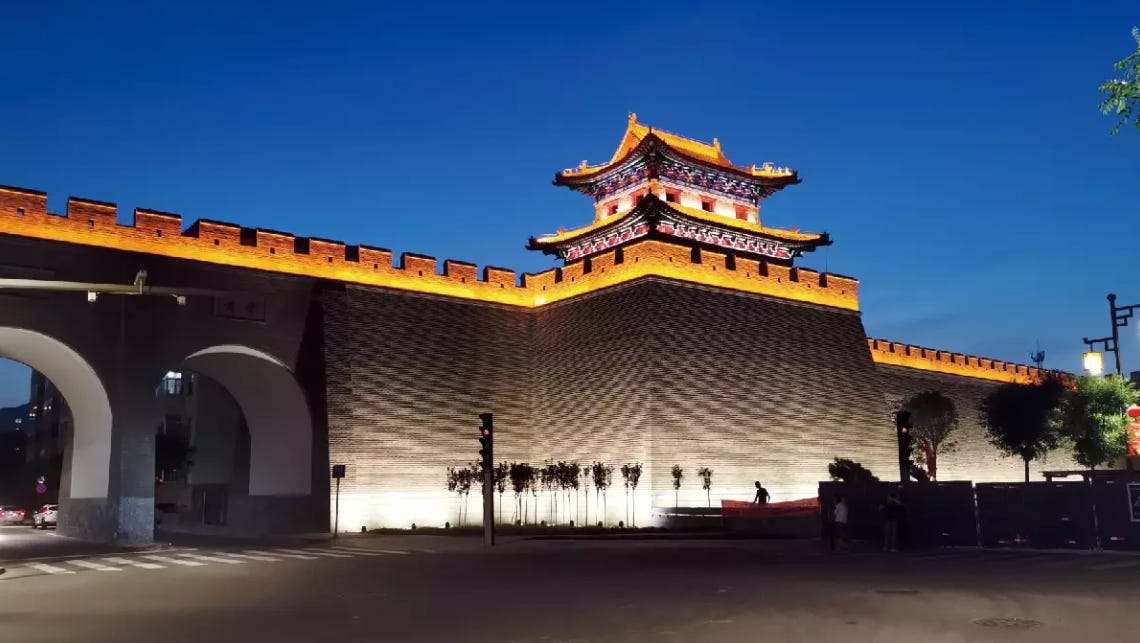
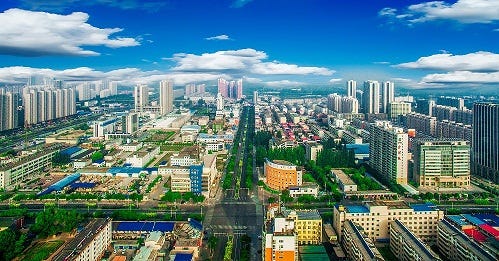
Xinzhou was one of China’s poorest cities.
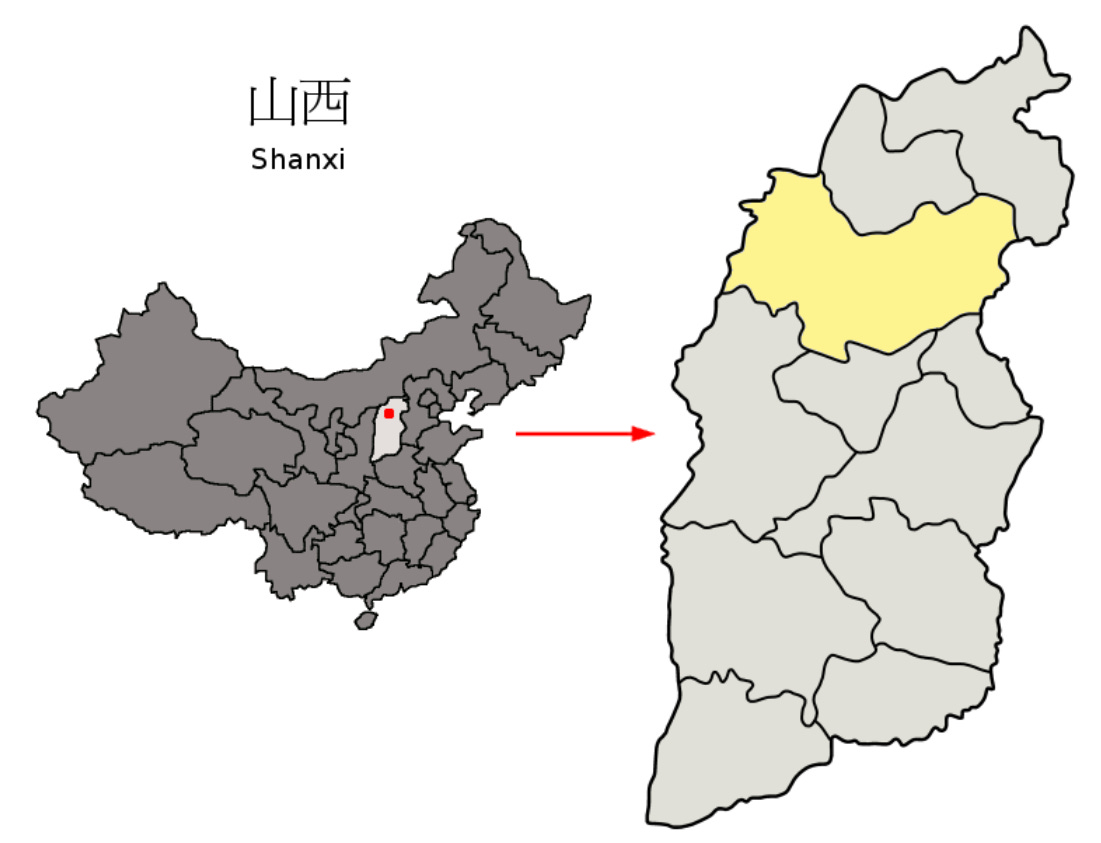
Eleven of its fourteen counties were designated poverty stricken. Eighty seven percent of its land was mountainous. It sat landlocked in northern Shanxi, a former frontier garrison that had outlived its military purpose, a coal producer that could not compete with better-endowed neighbours, a corridor that no longer commanded the traffic it once did.
By any conventional measure, Xinzhou was replaceable. Yet in 2025, eighteen million tourists came to Xinzhou.
How did a city that seemed replaceable become a destination that people travel across the country to experience?
That is the question this article will answer.
The Historical System
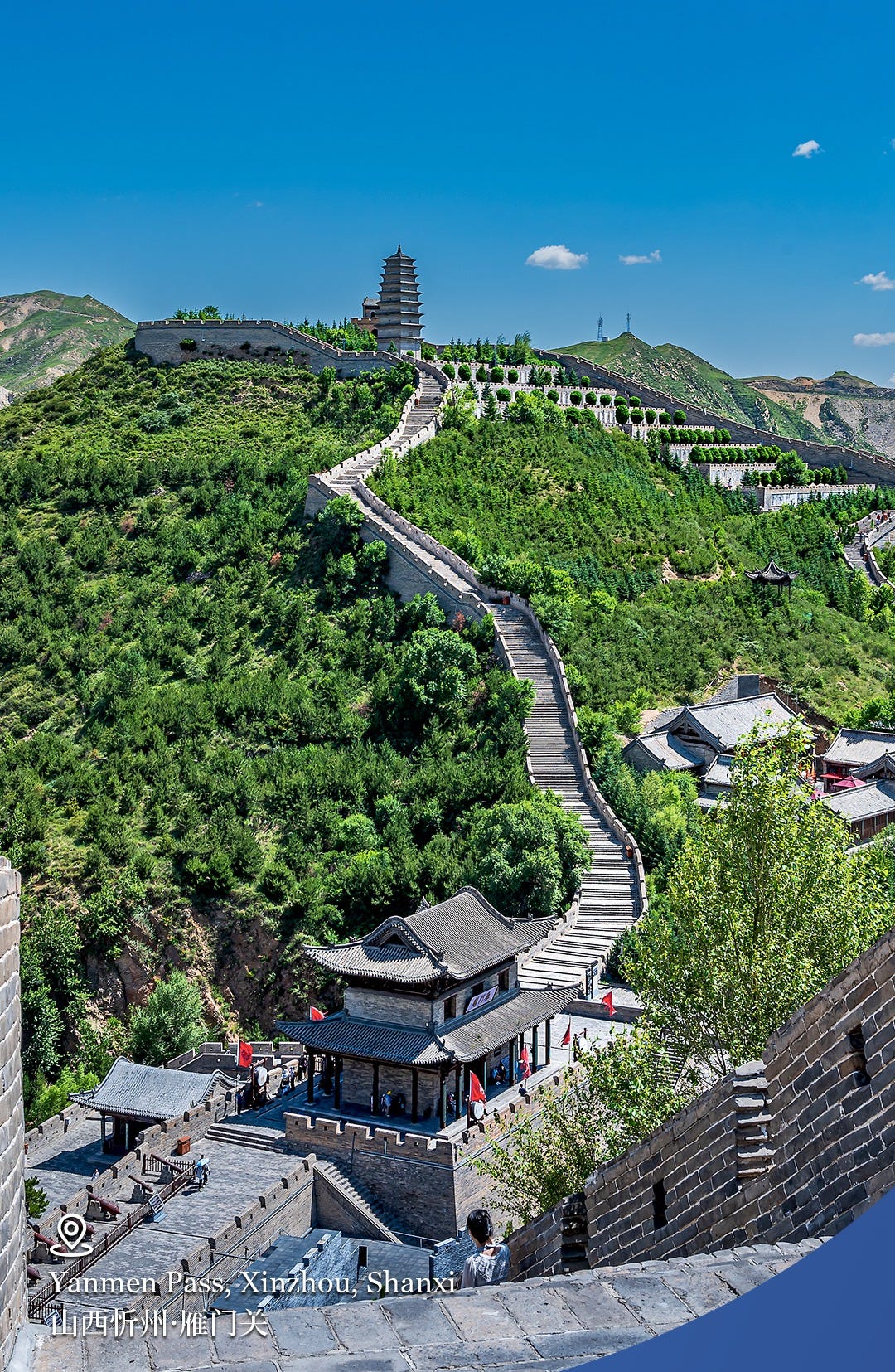
Xinzhou was not built to last. It was built to hold a line.
For over a thousand years, its identity was defined by what it guarded and what it connected. The city sat astride the only east - west corridor through northern Shanxi, commanding the passes of the Great Wall; Yanmen, Ningwu and Pianguan that separated the Central Plain from the steppe.1 It was the key to northern Shanxi, the choke point of Jinbei, a military administrative centre whose function was transitive: it facilitated movement, but it did not generate anything uniquely its own.2
The city’s value was positional. It was a gate.
When the gate functioned, Xinzhou mattered. Merchants passed through on the tea route between China and Russia.3 Troops passed through to defend the frontier. Officials passed through to administer a territory that was always on the edge of something larger. But the city itself was never the destination, it was the corridor.
That corridor made Xinzhou strategically useful. It did not make it irreplaceable.
Any force that controlled the pass could perform the same function and over the centuries, many did. The city changed hands, changed administrative status, changed its relationship to the empires that claimed it. What remained constant was its role as a conduit, not a source.
The Break
The old system began to fail in the 20th century.
The military function ended. The Great Wall passes no longer guarded against incursions. The trade routes shifted. The tea route declined. Railways and highways bypassed the old corridor. By the time Xinzhou was converted from a prefecture to a prefecture level city in 2001, it had become what one historian described as a posthumous administrative unit, a city that existed because it had always existed, not because it was needed.4
What replaced the gate function was extraction.
Xinzhou had coal; 255 billion tonnes of proven reserves, 9.54% of Shanxi’s total.5 It had iron, bauxite, titanium, gold. It became a resource periphery of a resource periphery, performing a function; resource supplier that could be performed by any number of other prefectures in Shanxi or elsewhere.
The problem was not that Xinzhou lacked resources. The problem was that the resources were fungible. Coal from Xinzhou was not different from coal from Datong or Lüliang. The iron, bauxite, and titanium fed global commodities markets where price, not provenance, determined value.
Xinzhou was replaceable because its assets were not specific to it. The city had resources, but it had no monopoly. It had position, but the position no longer commanded traffic. It had history, but history alone does not pay bills.
By the late 20th century, Xinzhou was simply another administrative centre in a landlocked province; one of the poorest in China, straddling two contiguous destitute areas, with 11 of its 14 county level divisions designated national poverty focus counties.6
The old system was no longer sufficient.
Discovery
When the old system collapsed, Xinzhou was left with nothing that the wider world valued.
Or so it seemed.
What remained, scattered across the county, hidden in villages and workshops and family traditions, was something the city had never thought to measure.
In the villages, practitioners still worked with their hands. A dyer in her workshop, tending a vat of indigo that had been maintained for decades, producing colours that could not be replicated with synthetic dyes. If maintained well, the dye could outlive me, said Zhao Hui, the local inheritor, noting that her workshop now offers over 100 different color variations.7 A paper cutter in her home, using only scissors and single colour rose red paper, creating patterns so intricate that locals called them walking fireworks. In 2014, the paper cutting tradition was inscribed on the national intangible cultural heritage list. In 2025, its inheritor, 71 year old Lü Hui, was named a national level inheritor.8
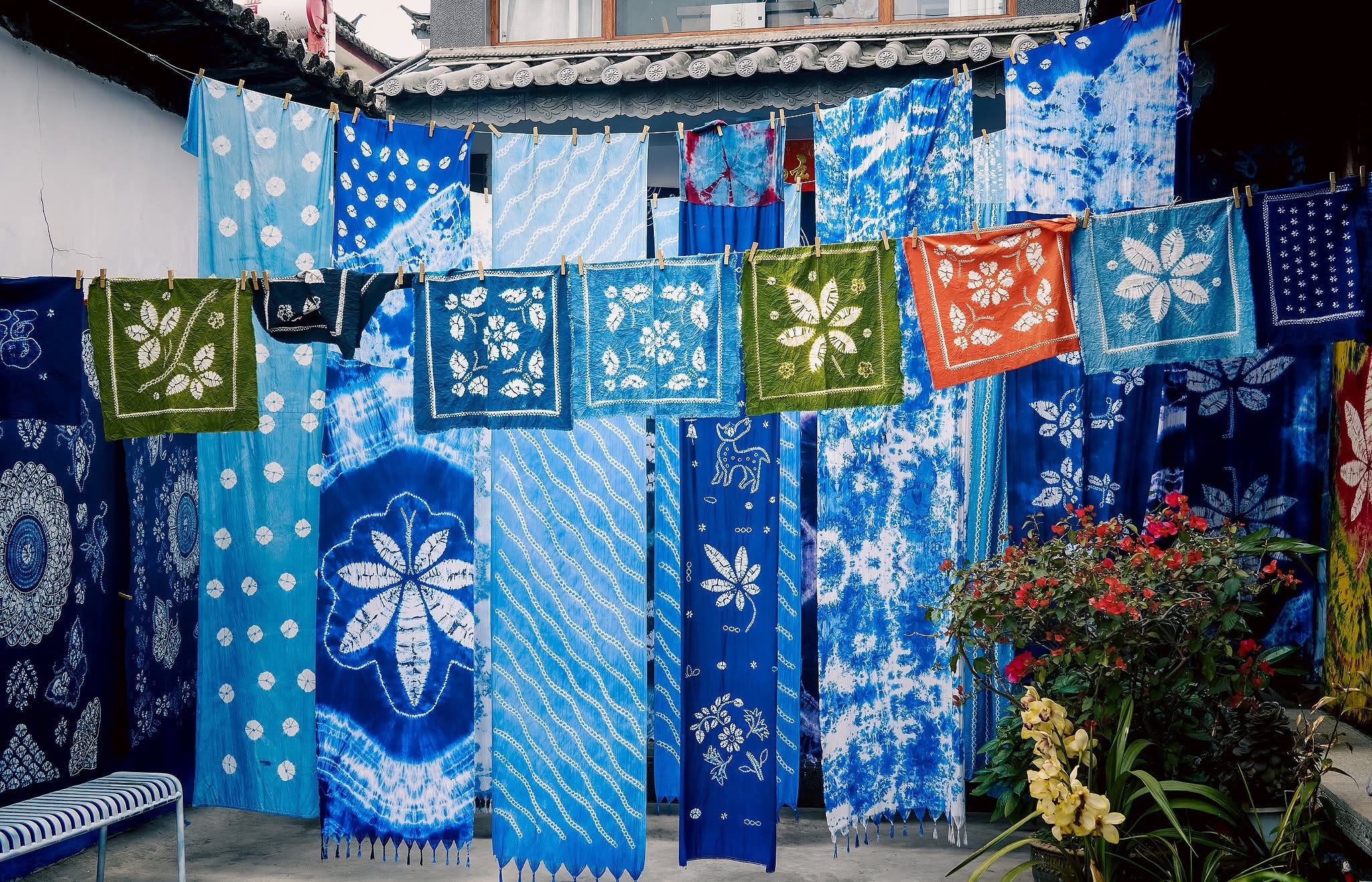
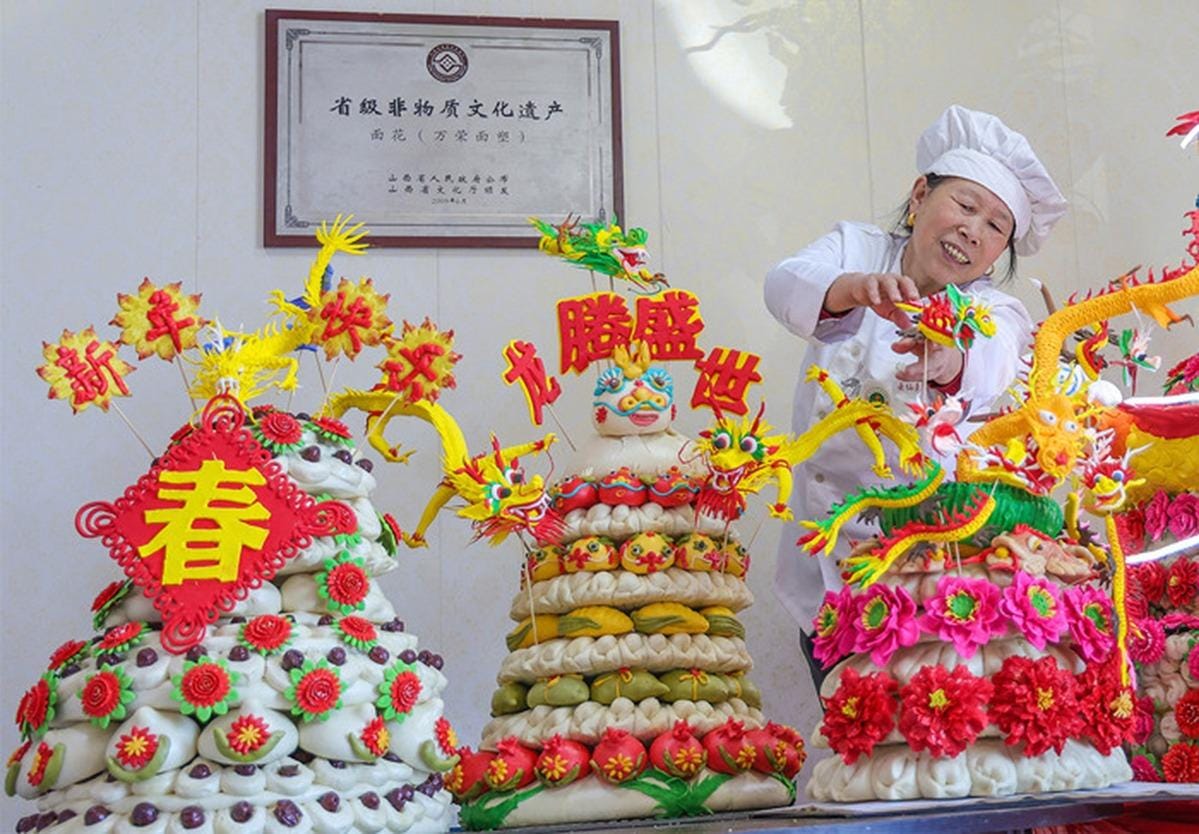
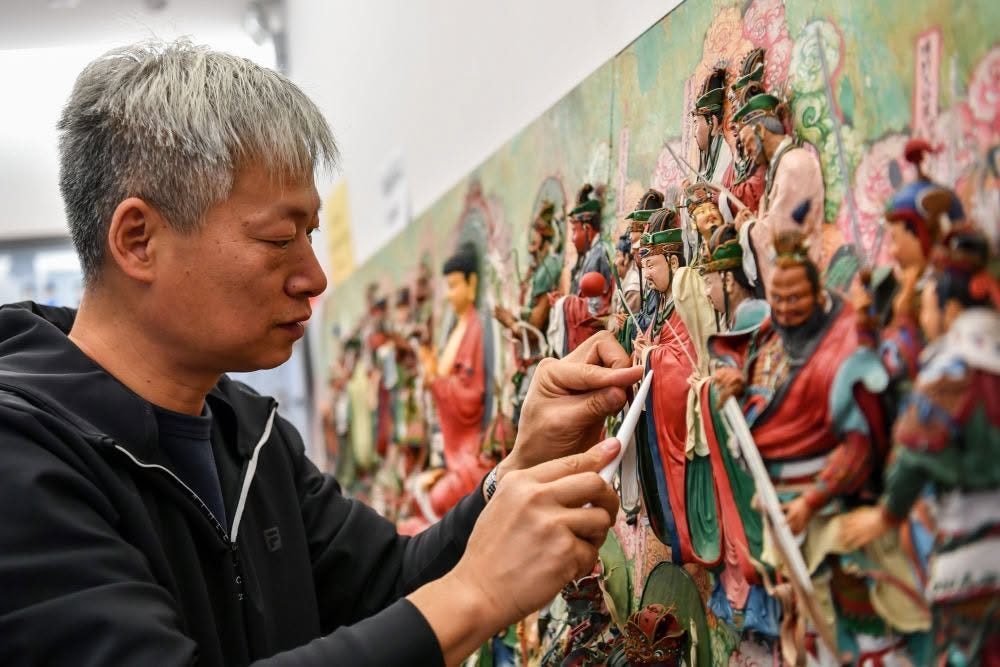
A dough sculptor shaping festival offerings with techniques passed down through generations. The Dingxiang Dough Sculptures are mostly relief style, featuring a rugged and simple style described as possessing an elegant and primitive beauty.9 An embroiderer whose work was so distinctive that she had developed a technique no one else practised, combining flat embroidery with relief style padding to create textured works that felt almost sculptural.10
These were not heritage performers. They were practitioners. They had learned from their predecessors and were now teaching the next generation. The lineages were unbroken.
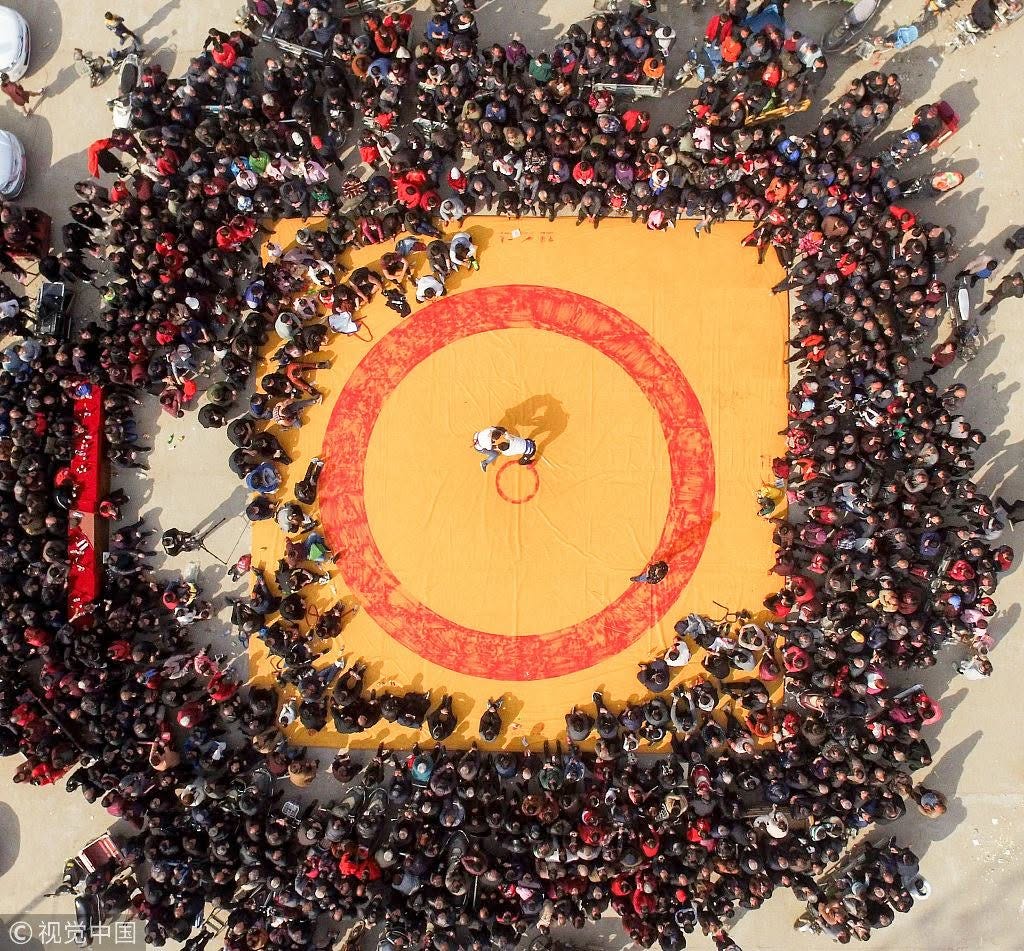
Some of these traditions were ancient. The wrestling tradition; bare chested, with limited referee authority had evolved from ancient martial practices. In June 2008, it was approved for inclusion in the second batch of the National Intangible Cultural Heritage list. In 2025, its inheritor was named a national level inheritor.11
The scale of what had survived was extraordinary. Daixian county alone; one of Xinzhou’s administrative divisions documented 108 intangible cultural heritage representative projects. Twenty six heritage workshops operated within its boundaries. Across the city, sixteen national level intangible cultural heritage projects were documented, with twenty seven national level inheritors, alongside seventy five provincial level projects and one hundred and six provincial level inheritors.12
But the scale did not capture what made Xinzhou different. The difference was that the heritage was not dead. It was not museumified. It was alive; practised daily, transmitted continuously, embedded in the rhythms of community life.
The question was whether anyone would notice.
The Recognition
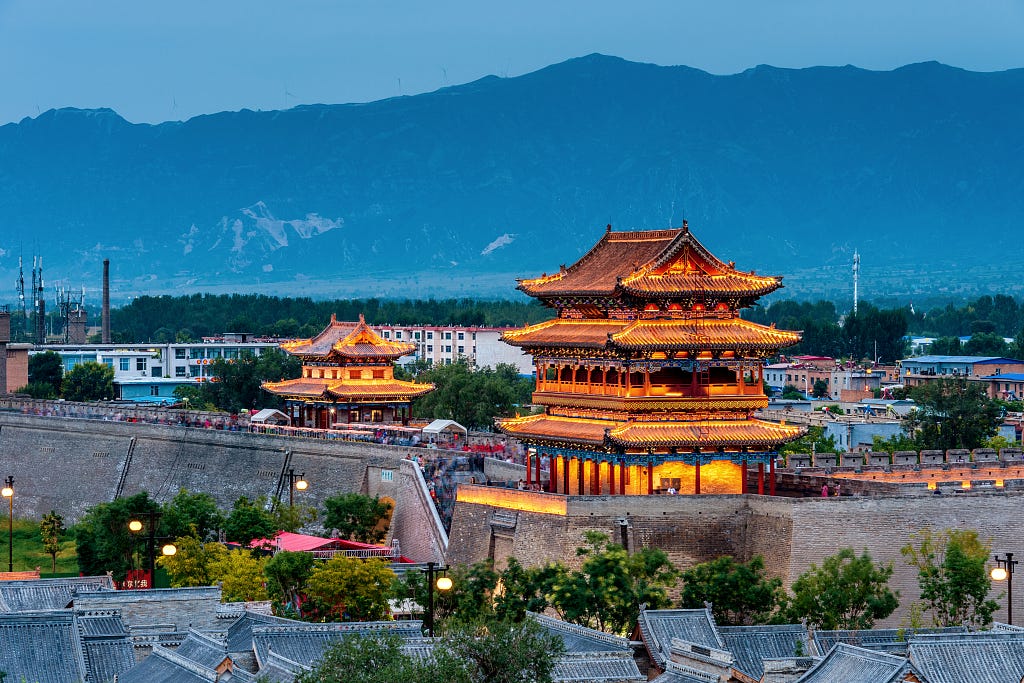
The first recognition came from the state. Over the course of the 2000s and 2010s, Xinzhou’s traditions were formally inscribed on national and provincial intangible cultural heritage lists. The wrestling tradition made the national list in 2008. Others followed. In March 2025, five Xinzhou inheritors; spanning folk song, opera, wrestling, and paper cutting were simultaneously named to the sixth batch of national level inheritors, a rare concentration for a single city.13
But formal recognition alone does not create economic value. It creates a plaque. It does not create a livelihood.
The second recognition was more consequential. It came not from officials, but from the market.
A shift was underway in Chinese tourism. Travellers were no longer satisfied with passive sightseeing. They wanted to participate. They wanted to learn. They wanted to pay for unique emotional value, social experiences, and memories of the process. The handmade economy a term that would define Xinzhou’s transformation was emerging.14
As Yan Chun, a folklore scholar and associate professor at Shanxi Normal University, explained: Consumers are no longer satisfied with passive reception; they are more willing to pay for unique emotional value, social experiences, and memories of the process.15
The heritage had always been there. The inheritors had always been practising. The skills had always been accumulating. But until the handmade economy emerged, there was no market for what Xinzhou uniquely offered.
The recognition was the match. The heritage had supply. The handmade economy had demand. Xinzhou; with its density, its authenticity, its unbroken lineages was the only place where the two could meet at scale.
Discovery ends at recognition.
What was seen was not the heritage itself. The heritage had always been visible to those who looked. What was seen was the match the convergence of centuries of accumulated skill with a new consumer demand for authentic, participatory experience.
The question was no longer whether Xinzhou had something valuable. The question was whether the city would recognise what it had and what it would do with it.
Activation
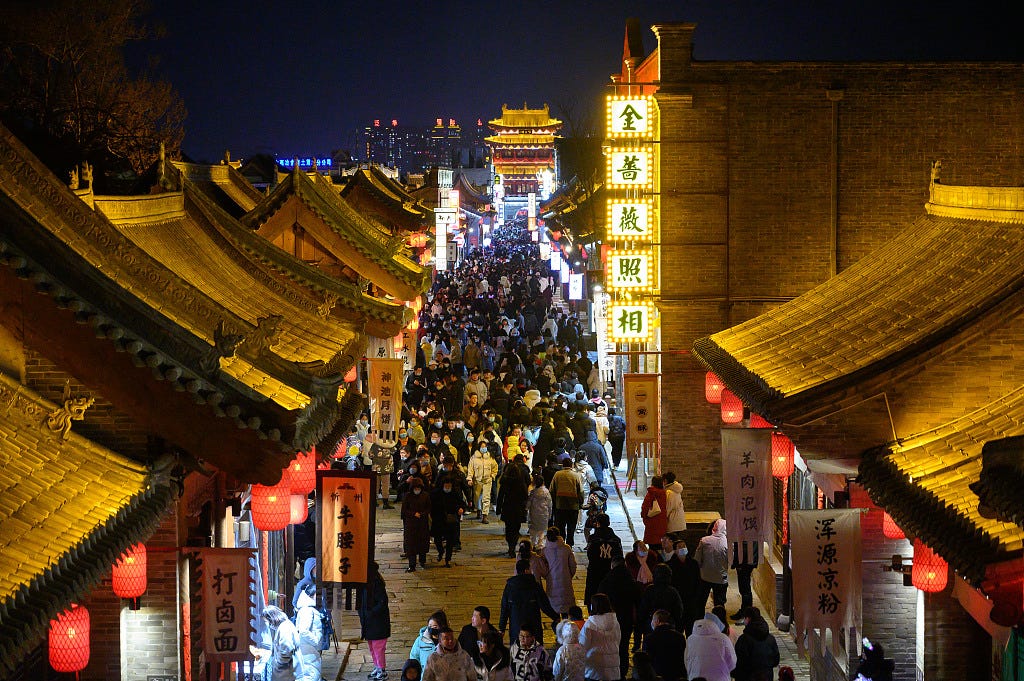
Xinzhou did not simply open its doors and wait for tourists to arrive. It built a mechanism that would concentrate, institutionalise and activate what had been scattered, fragile and invisible.
Concentration
The first move was physical.
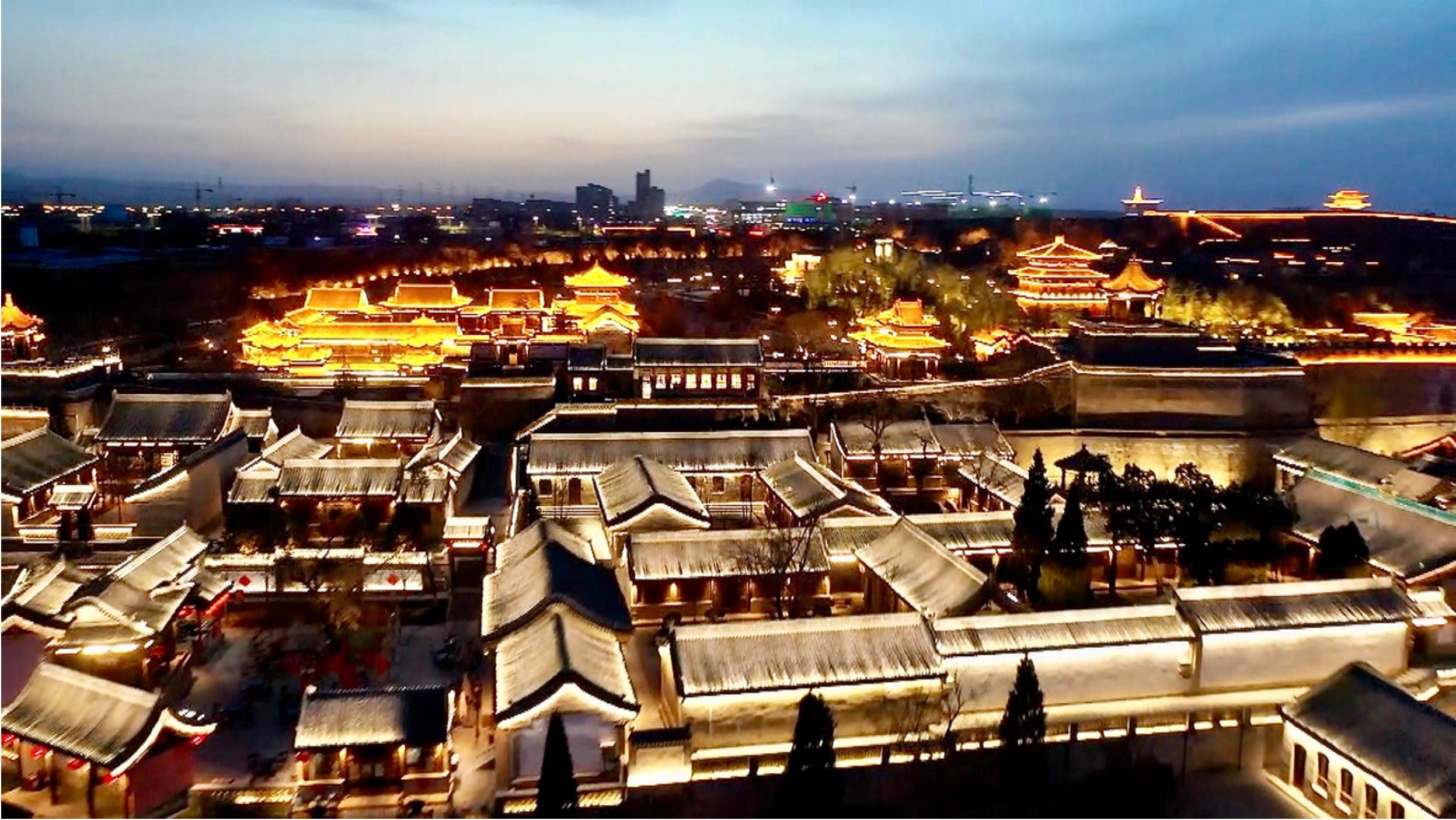
Xinzhou designated a street in the ancient city; Guan Di Miao Lane, as a dedicated space for intangible cultural heritage workshops. Fifteen studios were established side by side, each one a working space where inheritors practised their craft, taught visitors and sold their products.16
This was not a museum, it was a workshop. The inheritors were not performers performing for tourists. They were practitioners doing what they had always done but now, they were doing it in plain sight.
The concentration created something that had not existed before: density. A visitor could walk down a single lane and experience natural dyeing, dough sculpture, paper cutting, embroidery and more all in one afternoon. The scattered became visible. The invisible became navigable.
Thirty creative cultural shops were established, including twelve intangible cultural heritage projects.17
Institutionalisation
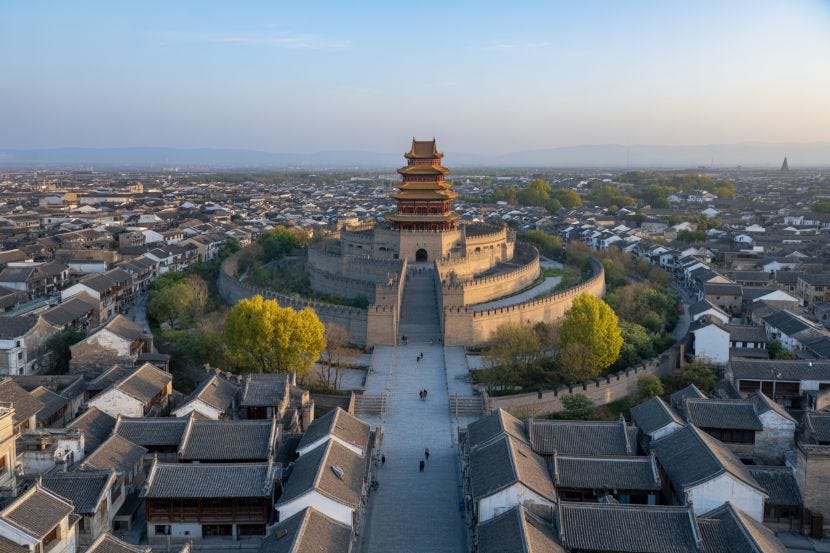
The second move was structural.
Xinzhou formalised the role of inheritor through the four tier intangible cultural heritage system; national, provincial, municipal and county levels. This was not bureaucracy, it was a mechanism for knowledge continuity.
The designations gave inheritors legal status, government support and a formal role in transmitting their skills to the next generation. In March 2025, five Xinzhou inheritors; spanning folk song, opera, wrestling and paper cutting were simultaneously named to the sixth batch of national level inheritors.18 Across the city, twenty seven national level inheritors and one hundred and six provincial level inheritors were documented.19
The institutionalisation also created a succession pipeline. Inheritors trained apprentices and apprentices became inheritors. The knowledge did not die with the master. Daixian county alone documented 108 intangible cultural heritage representative projects and operated 26 ICH workshops.20
The effect was cumulative. The more the system formalised, the more it reproduced itself.
Experience-ification
The third move was experiential.
Xinzhou shifted from passive observation to active participation. Tourists did not watch the dyeing; they dipped the silk themselves. They did not see the dough sculptures; they shaped them. They did not observe the paper cutting; they learned the technique.
The dyeing workshop, for example, offered visitors the experience of watching silk turn from white to green to indigo as it was exposed to air, a process described as magic that made visitors feel like designers.21 The dough art workshops offered instruction in both traditional shapes and cartoon style buns, adapting the tradition to contemporary tastes while maintaining the underlying skills.22
This was the crucial shift. The value was no longer in the product; the dyed scarf, the paper cutting, the embroidered textile. The value was in the experience of making it. The product became a souvenir of the experience, not the reason for it.
As the China Daily coverage noted:
Consumers are no longer satisfied with passive reception; they are more willing to pay for unique emotional value, social experiences and memories of the process.23
Xinzhou had built a system that sold exactly that.
Integration
The fourth move was systemic.
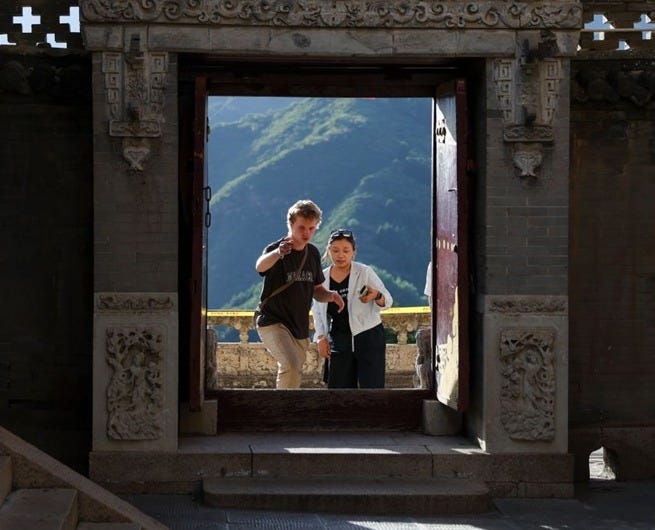
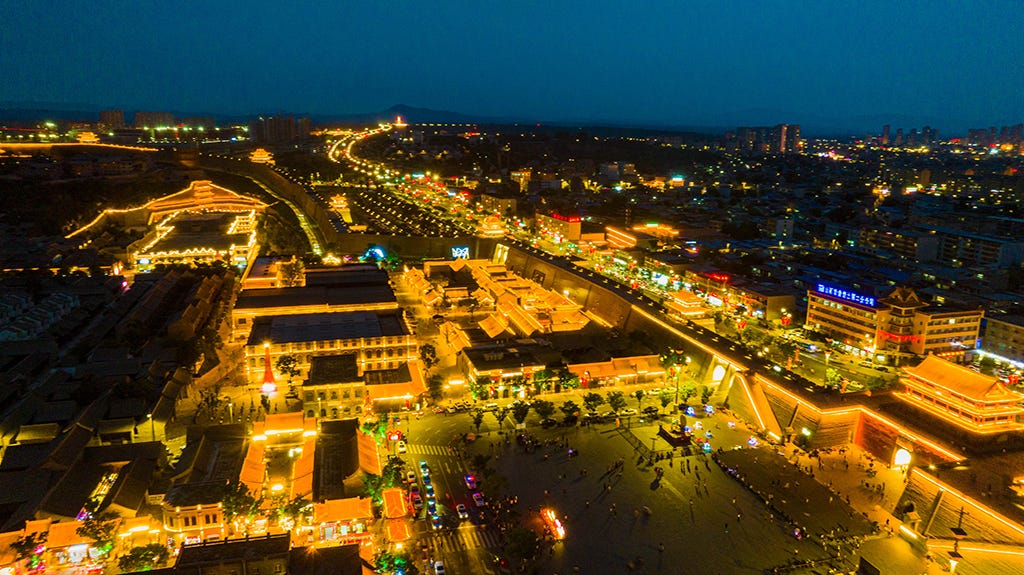
The heritage experience was integrated into Xinzhou’s broader tourism infrastructure. The ancient city provided the setting. Mount Wutai, one of China’s four sacred Buddhist mountains provided the initial tourist draw. The heritage experiences provided the reason to stay longer, to return, to tell others.
The integration created a flywheel. Tourists came for the heritage. They spent money in the ancient city. The businesses thrived. The inheritors earned a living. The system sustained itself.
By 2025, over 1,200 businesses were operating in the ancient city. Eighteen million tourists visited Xinzhou. The ancient city was generating $138 million in revenue, $31 million more than the previous year.24
The Architecture of Activation
The four layers reinforced the others. The physical space made the inheritors visible. The institutional framework made their work legitimate. The experiential model made it economically viable. The integration with tourism made it scalable.
The pieces together produced a position that the individual pieces could not have produced alone.
The Doctrine
Xinzhou reveals a principle about the strategic value of accumulated human capability embedded in place.
It is not about heritage, nor tourism, nor culture as a commodity. It is about something more fundamental: the activation of what already exists.
Most systems that possess depth treat it as something to be preserved, protected and displayed. They build museums, apply for certifications and then wait. They treat accumulated knowledge as something that belongs to the past rather than as a capability that can produce the future.
Xinzhou did something different. It treated its accumulated capability as a living input into a new economic system.
A system becomes irreplaceable when it activates a dense, living and participatory ecosystem of embodied knowledge as its primary value engine.
Why this logic works
The replication barrier is time, not capital.
A competitor can build infrastructure. It can hire practitioners. It can copy policies. But it cannot recreate generations of accumulated skill, specific lineages of practitioners, the material conditions that shaped those practices, or the social trust that developed around them.
The substitution barrier is authenticity.
Another system can offer similar experiences. It cannot offer the same authenticity, because authenticity is the product of unbroken practice in a specific place, with specific materials, people and histories.
The dependency, therefore, is not on the individual product.
It is on the living ecosystem that produces it.
What makes it transferable
The principle applies wherever a system possesses a dense accumulation of embodied knowledge that is specific to its context and can still be performed, taught and experienced.
That might be folk arts, cuisine, music, craftsmanship, specialist manufacturing, agricultural knowledge or any other capability in which generations of practice have created something that capital alone cannot reproduce.
The transferable mechanism is not the content.
It is activation.
The question is not simply what has been accumulated.
It is whether that accumulated capability can be brought into the present, connected to demand, and reproduced through a living system.
Position in the Fortress
Hidden Value Recognition
Core Principle: The Living Heritage Principle, activate accumulated embodied knowledge into a participatory economic system.
Why This Family
Xinzhou belongs to Hidden Value Recognition because its distinctive advantage came from recognising value in something that had been overlooked.
But its contribution differs from the earlier cities in this family.
Relationship to Previous Cities
Xiahe recognised that existing resources could command a premium when connected to a powerful story of origin and purity.
Qiandongnan recognised that existing cultural traditions could become legible to outside markets through certification and institutional infrastructure.
Suizhou recognised that a defining cultural asset could become the foundation for a second economic life.
Ordos recognised value inside failed physical investments.
Huai’an recognised value inside infrastructure left behind by an exhausted economic system.
What Difference Does Xinzhou Bring?
The previous examples largely involve converting hidden value into something else.
Xinzhou reveals another possibility:
Sometimes the hidden value is the capability itself.
The objective is therefore not to transform the underlying asset into a new product, story or category.
It is to activate the accumulated capability and make the living system around it economically productive again.
New Contribution to the Fortress
Xinzhou adds the activation mechanism to Hidden Value Recognition.
It shows that accumulated human capability can become irreplaceable when it is concentrated, institutionally supported, made participatory and connected to a functioning market; without having to be transformed into something fundamentally different.
Reflection
You have been told to look forward.
The future is where value lives. The next industry, the next technology, the next skill. Definitely the next thing that will finally make you matter. Whatever you have now is not enough, what you know now is becoming obsolete and whatever you have accumulated is simply waiting to be replaced.
This is the story we are told every day, and most of us believe it. We abandon what we have, chase what we do not have and become replaceable because we are always one step behind the next thing, always arriving after the opportunity has moved on.
But what if the problem isn’t always that we don’t have enough?
What if we have accumulated more than we realise?
A skill you have spent years developing. A relationship you have spent decades building. Knowledge that feels ordinary only because you have lived with it for so long. A way of doing something that nobody thought was particularly valuable because you never stopped to see what it could become.
We are very good at looking outward for the next thing.
Perhaps we are less good at looking inward at what has already been accumulating quietly around us.
Sometimes the next move isn’t to acquire something new. Sometimes it is to recognise what is already there and finally give it a system through which it can become valuable.
What have you accumulated that you have been told is worthless?
What might happen if, instead of abandoning it, you learned how to activate it?
Next Week: Yibin
Xinzhou showed us the value of the capabilities, built over time.
Next week, we turn to a city that faced a different problem.
Yibin sits at the confluence of three rivers; the Yangtze, the Min and the Jinsha in southern Sichuan. It has geography, history and a name that echoes through Chinese culture as the home of a famous liquor. But geography alone does not make a city irreplaceable and fame is not the same as sovereignty.
What Yibin discovered is that its advantage was not in the confluence of rivers. It was in what the confluence made possible, an accumulation of something else entirely. Something the city is only now learning to activate.
Next week: Yibin 🟢

Shanxi Provincial Annals, Geography of Shanxi, Vol. 2 (Taiyuan: Shanxi People's Publishing House, 1999), 156.
Xinzhou Municipal Government, Xinzhou City Gazetteer (Xinzhou: Xinzhou Archives Press, 2005), 23.
Zhang Yuan, The Tea Road: Commerce and Culture in Northern China (Beijing: China Commerce Press, 1985), 312–15.
Li Xiaoming, "The Administrative Transformation of Shanxi Prefectures, 1949–2001," Journal of Chinese Urban History 34, no. 2 (2003): 67.
Shanxi Provincial Bureau of Statistics, Shanxi Statistical Yearbook 2020 (Taiyuan: China Statistics Press, 2020), 189.
State Council Leading Group for Poverty Alleviation and Development, National Poverty Counties List 2010 (Beijing: State Council Press, 2010), 45.
Zhao Hui, inheritor of traditional natural dyeing technique, quoted in "From Indigo Dye to Dough Art, Xinzhou Turns Tradition into Experiences," China Daily, May 7, 2026.
"Shanxi folk embroidery," China Daily, July 19, 2018.
The aesthetic appeal of Naoyang Village in Xinzhou,” Journal of Physical Education, 2017.
Xinzhou: The Fortress Relocated to an Exhibition Hall, Showcasing a Revitalized Cultural Atmosphere Shanxi Daily, August 18, 2025.
“Xinzhou City has added 5 national-level representative inheritors of intangible cultural heritage,” said the Xinzhou Municipal People’s Government.
"Handmade economy booms as youth embrace immersive heritage," People's Daily Online, April 24, 2026.
Yan Chun, associate professor at Shanxi Normal University, quoted in "From Indigo Dye to Dough Art, Xinzhou Turns Tradition into Experiences," China Daily, May 7, 2026.
"From Indigo Dye to Dough Art, Xinzhou Turns Tradition into Experiences," China Daily, May 7, 2026.
"Handmade economy booms as youth embrace immersive heritage," People's Daily Online, April 24, 2026.
Xinzhou City has added 5 national-level representative inheritors of intangible cultural heritage. (Xinzhou Municipal People’s Government)
Xinzhou: The Fortress Gate Moves to an Exhibition Hall, Showcasing a Revitalized Cultural Atmosphere. Shanxi Daily, August 18, 2025.
Daixian County, Shanxi Province, has a total of 108 representative intangible cultural heritage items. (Shanxi Provincial People’s Government) November 25, 2024.
Zhao Hui, inheritor of traditional natural dyeing technique, quoted in “From Indigo Dye to Dough Art, Xinzhou Turns Tradition into Experiences,” China Daily, May 7, 2026.
Gao Juan, inheritor of dough sculpture technique, quoted in “From Indigo Dye to Dough Art, Xinzhou Turns Tradition into Experiences,” China Daily, May 7, 2026.
Yan Chun, associate professor at Shanxi Normal University, quoted in "From Indigo Dye to Dough Art, Xinzhou Turns Tradition into Experiences," China Daily, May 7, 2026.
"Ancient city cultural tourism projects gain popularity," Shanxi Daily, February 17, 2026.
This was very inspiring to me. I've been focusing more on my crocheted lace art. But I've been feeling like it's sort of useless or stuck in the past even though my approach is actually very modern. This inspired me to think that perhaps other people might find value in updated version of my heritage craft. I've been working on it for the last 46 years.